
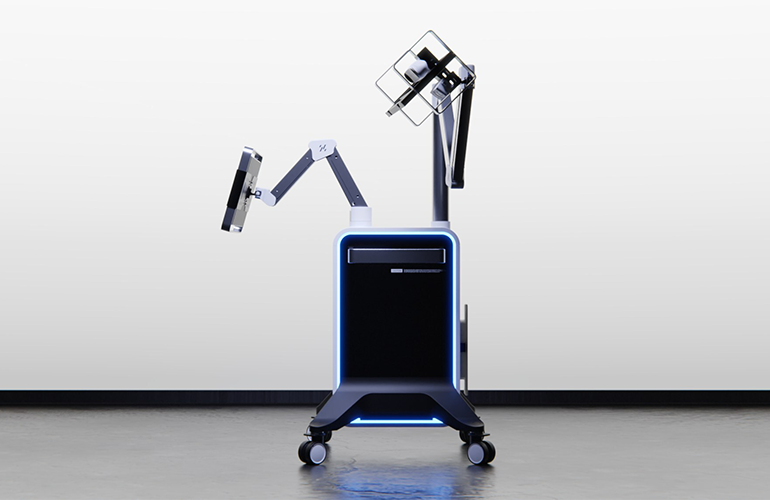
Zeta Surgical has received FDA 510(k) clearance for its TMS Robotic System, classified as a stereotaxic instrument. The Boston-based company built the platform to improve how clinicians deliver transcranial magnetic stimulation, a non-invasive brain therapy that doesn’t require surgery or anesthesia.
TMS works by modulating specific brain regions and neural circuits using magnetic pulses. It’s primarily used for treatment-resistant depression, but also covers a range of other conditions including obsessive-compulsive disorder, PTSD, and addiction disorders. The catch is that accuracy matters enormously. Hit the wrong spot, or drift even slightly between sessions, and the therapy loses effectiveness. That’s the problem Zeta’s robotic system is designed to fix.
The clearance is the latest in a string of regulatory wins for Zeta, which has been building out its FDA-cleared portfolio steadily over the past year. The company got clearance for its TMS navigation system back in October 2025, followed by approvals for expanded software features, mixed reality tools, AI-powered navigation, and its navigated Stylet and Bolt instruments. In May 2026, it reported the first commercial deployment of that navigation system.
What the robotic system actually does
The core function of the TMS Robotic System is real-time positioning of TMS coils with submillimeter accuracy. In practice, that means the robot continuously tracks patient movement during a session and adjusts the coil position automatically to keep stimulation on target. Patients move. They shift in their seat, turn their head slightly, or just fidget. Without compensation, those small movements can push the coil off the intended brain region.
Beyond accuracy, Zeta says the system is designed for fast clinical deployment:
- Setup time under one minute
- Compatible with virtually any point-of-care environment
- No requirement for clinics to change existing workflows
That last point matters. New medical technology often demands that clinics retrain staff or restructure how they operate. Zeta’s pitch is that this system slots into existing TMS workflows rather than replacing them.
Why this clearance is significant
TMS has been around for decades, but its adoption has been limited partly by the skill required to position the coil correctly and consistently across sessions. Robotic positioning removes much of that variability, which could make the therapy more reliable and easier to scale across different clinical settings.
Benjamin Lee, Zeta’s chief product officer, described the system as an extension of its existing image guidance platform. “It uses that same guidance to dynamically adjust position throughout a session, without asking clinics to change how they already work,” he said.
Dr. William Gormley, co-founder of Zeta Surgical and a neurosurgeon at Mass General Brigham, framed the broader opportunity: “This clearance brings operating-room-level navigation and robotic accuracy into a platform that can be rapidly deployed in virtually any clinic. By making precise and repeatable TMS delivery easier to integrate into routine clinical care, we believe the system can help expand access to advanced, targeted brain therapies for patients across the country.”
The bigger picture for neuromodulation
Zeta’s progress sits within a wider push to bring more precision to non-invasive brain therapies. Mental health treatment in the US is under pressure from both a shortage of providers and a high rate of patients who don’t respond to medication alone. TMS is one of the few FDA-cleared alternatives for treatment-resistant depression, but access remains uneven.
Robotic systems that reduce the expertise required to deliver consistent TMS could help more clinics offer the therapy reliably. Whether Zeta’s commercial rollout matches its regulatory momentum is the next question to watch.