
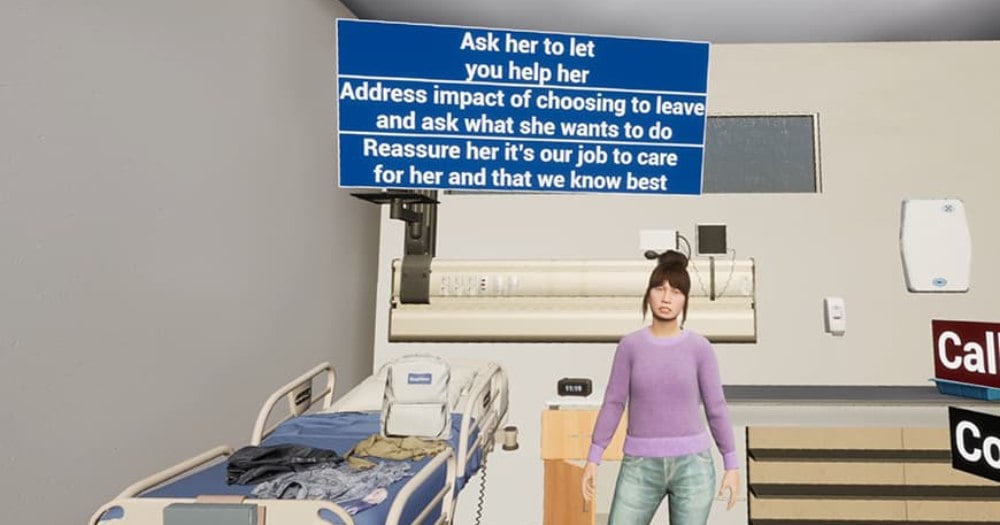
A single 20-minute virtual reality training session can significantly boost medical professionals’ confidence in managing aggressive patients, according to new research from Edith Cowan University (ECU). The study highlights how immersive technology could quickly strengthen frontline healthcare skills when they’re needed most.
The research comes as hospital violence surges across Australia. Assaults rose 48% in Queensland, 44% in New South Wales, and 60% in Victoria between 2015 and 2018. A survey of over 3,000 Australian nursing and midwifery staff found 79% had experienced workplace violence in the six months before completing the survey.
How does it work?
The study involved 221 undergraduate Australian nursing students who completed a VR de-escalation training program called I-VADE. ECU’s Simulation and Immersive Digital Technology Group developed the program with input from clinical experts, including:
- Hospital-based work health and safety managers
- Workplace violence training coordinators
- Experienced frontline healthcare workers
Students trained in groups of 20, each using individual VR headsets. Just two trained facilitators were needed to guide the entire group through the experience and provide debriefing afterward.
“We had an overwhelmingly positive response from the students that took part in the study. We found a statistically significant improvement in their confidence to manage patient aggression,” said PhD candidate Joshua Johnson, who led the research.
Why does it matter?
Healthcare workers often feel unprepared to handle violent situations when they enter the workforce. This lack of preparation has serious consequences:
- Burnout among medical staff
- Workplace absenteeism due to injury
- Early exit from the healthcare profession
- Reduced capacity to effectively treat patients
ECU Associate Professor Brennen Mills, who led I-VADE’s development, said the skills are now essential rather than optional. “Frontline workers walk into unpredictable, high-pressure situations every day, and too often they’re expected to learn how to manage aggression on the job,” he explained.
The VR training allows healthcare workers to practice de-escalation strategies in realistic scenarios before encountering them in real-world situations where stakes are high.
The context
The program has already expanded beyond its original testing ground. While ECU directly managed initial implementations in Western Australia, this research saw I-VADE administered across the country by people who weren’t involved in its development.
“What is really encouraging is the results from this research echoed those found from cohorts we helped facilitate here in WA, proving the scalable efficacy of this technology,” Mills said.
I-VADE is now available through Alpha Immersion, with commercial trials planned for later this year. The program is being used in multiple locations across Australia to train frontline healthcare workers.
The technology addresses a gap in current medical education. Johnson noted that while training in violence de-escalation can effectively prepare students and clinicians, there’s limited evidence of widespread implementation in Australian nursing and medical programs.