
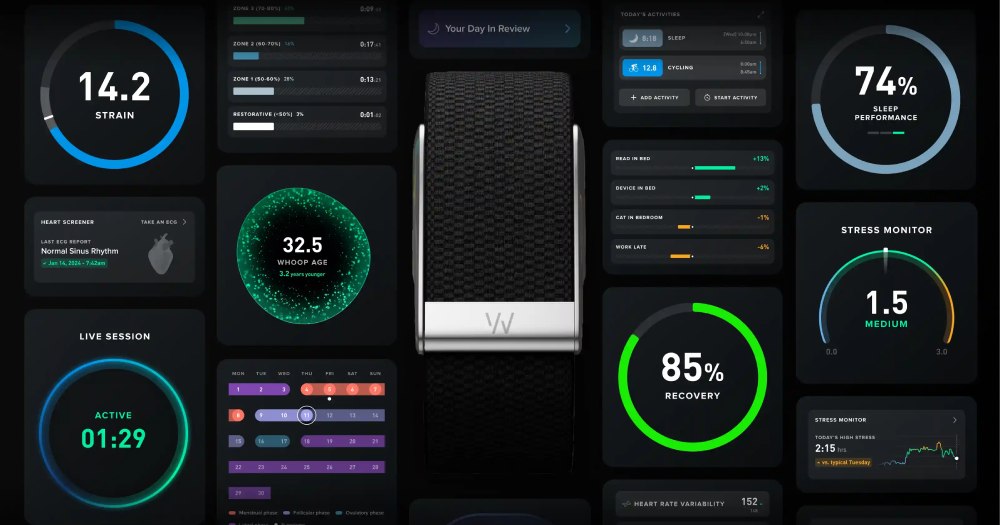
WHOOP is making a big bet on healthcare. The fitness tracking company announced a major expansion of its platform that includes live video consultations with licensed clinicians and new AI features designed to provide more personalized health insights.
The move signals WHOOP’s evolution from a performance tracking device into a broader health platform. This shift comes as wearable companies increasingly compete to become central hubs for health management, not just fitness monitoring.
On-demand clinician consultations coming this summer
WHOOP’s biggest new feature launches in the US this summer: on-demand video consultations with licensed clinicians directly through the app. Unlike typical telehealth services that work with limited patient information, these consultations will have access to months of continuous biometric data from the user’s WHOOP device.
The company is also adding electronic health record (EHR) syncing through a partnership with HealthEx. Members can securely connect their clinical history, including:
- Medical diagnoses
- Current medications
- Past procedures
- Bloodwork results
This integration allows users and clinicians to see how medical treatments affect their recovery, exercise strain, and overall performance metrics captured by the WHOOP device.
AI coaching gets memory and proactive recommendations
WHOOP’s AI coaching system is getting two major upgrades. The first, called “My Memory,” lets users manage the personal context that informs their AI recommendations. Members can add, edit, or delete information about their goals and circumstances so the AI provides more relevant advice.
The second feature, “Proactive Check-Ins,” uses this stored context to deliver timely recommendations. The system might suggest prioritizing sleep before an important event or adjusting training intensity when traveling.
The company also redesigned its habit tracking journal. Users can now log behaviors and supplements using voice or text, and the AI will suggest new items to track based on patterns it detects in their data.
Why this matters for the wearables industry
WHOOP’s expansion into clinical health reflects a broader trend among wearable companies. Apple, Fitbit, and others are increasingly positioning their devices as health management tools rather than just fitness trackers.
The addition of clinician access is particularly significant because it addresses a common criticism of health wearables: they generate lots of data but provide limited guidance on what to do with it. By connecting users directly with healthcare professionals who can interpret their continuous biometric data, WHOOP is trying to close that gap.
The company says it will continue investing in both AI capabilities and core performance tracking, with plans for better workout detection and deeper integrations with other fitness apps.
WHOOP operates on a membership model rather than a one-time device purchase. The company has raised more than $950 million in venture capital and ships to 56 countries.