
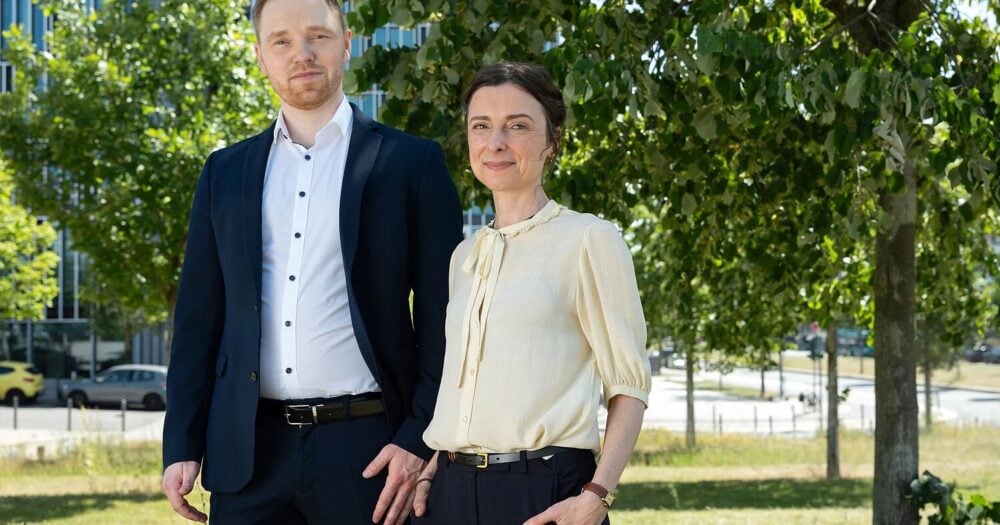
At-home health testing has a credibility problem. From overhyped wellness gadgets to the outright fraud of Theranos, the space has given clinicians good reason to be skeptical. So when a startup claims its saliva test can read your circadian rhythm and improve cancer outcomes, the instinct is to reach for the skepticism dial. But Angela Relógio, CEO of Berlin-founded biotech TimeTeller, is not Elizabeth Holmes. She’s a physicist-engineer and molecular biologist who spent years in oncology and circadian biology research before leaving academia — and she’s unusually careful about what her technology can and cannot do.
What the test actually does
TimeTeller’s core product is a direct-to-consumer saliva kit that maps a person’s circadian rhythm. It tells you something more specific than whether you’re a morning person or a night owl. The data can be used by longevity clinics, which represent TimeTeller’s early commercial market, to give personalized recommendations around sleep, nutrition, light exposure, and physical activity.
But Relógio is direct about the limits. The consumer kit alone will not tell a cancer patient when to take their medication. ‘That is something that we need to calculate for every single medicine; we do that in the context of clinical studies,’ she said. The longer clinical goal, chronotherapy, involves timing treatment to each patient’s biological clock to reduce side effects and improve efficacy. That work is ongoing, and she is not rushing to overclaim it.
The science behind the company
Relógio’s path to founding TimeTeller started with a frustrating pattern she kept seeing in cancer research. Patients were stopping or modifying their treatment because of side effects. ‘As a scientist, that was just impossible to watch,’ she said, ‘particularly when I was convinced that part of the problem might not only be what treatment we give, but when we give it.’
That conviction led her to develop a method for measuring circadian rhythm with enough precision to be clinically useful. She personally funded TimeTeller’s first patent. ‘I strongly believed that this discovery should not remain in scientific publications,’ she said. The company spun out of Berlin’s Charité university hospital and has since moved to Medical School Hamburg, which gave the team of 10 access to patients, funding, and, notably, a safety net of backup employment if the startup hit a cash crunch.
A health insurer deal that signals real traction
TimeTeller’s most significant signal of commercial viability is its partnership with Techniker Krankenkasse, one of Germany’s largest statutory health insurers with 12 million members. The arrangement started as a reimbursement deal covering the cost of the test for a defined group of cancer patients. Both sides are now preparing to expand it.
Co-founder Benjamin Dose, a biochemist and market access specialist, was brought in specifically to build this kind of institutional bridge. Getting a major insurer to reimburse a circadian test is not a small thing. It means the product has cleared a level of clinical and commercial scrutiny that most health tech startups never reach.
Why this matters beyond cancer
TimeTeller sees potential applications in metabolic disease, neurodegeneration, performance, and women’s health. But cancer is the primary focus, and the chronotherapy angle is where the science is most advanced and the clinical stakes are highest.
The broader argument Relógio is making is simple: timing is a missing variable in precision medicine. ‘Almost every process in our body is timed,’ she said. So the question isn’t just what drug, or what dose. It’s also when. That framing, if supported by the clinical data TimeTeller is working to generate, could have real implications for how oncology protocols are designed.
- Circadian rhythm measured via saliva sample at home
- Consumer kit targets sleep, nutrition, and lifestyle optimization
- Clinical program focused on timing cancer treatment for better tolerance
- Partnership with Techniker Krankenkasse includes reimbursement for cancer patients
- Spun out of Charité, now based at Medical School Hamburg
TimeTeller is early. The clinical validation work is still underway, and the gap between a consumer wellness kit and an oncology decision-support tool is significant. But the scientific pedigree is real, the insurer partnership is concrete, and the founder’s insistence on honesty about what the product can do today is, in this space, genuinely rare.