
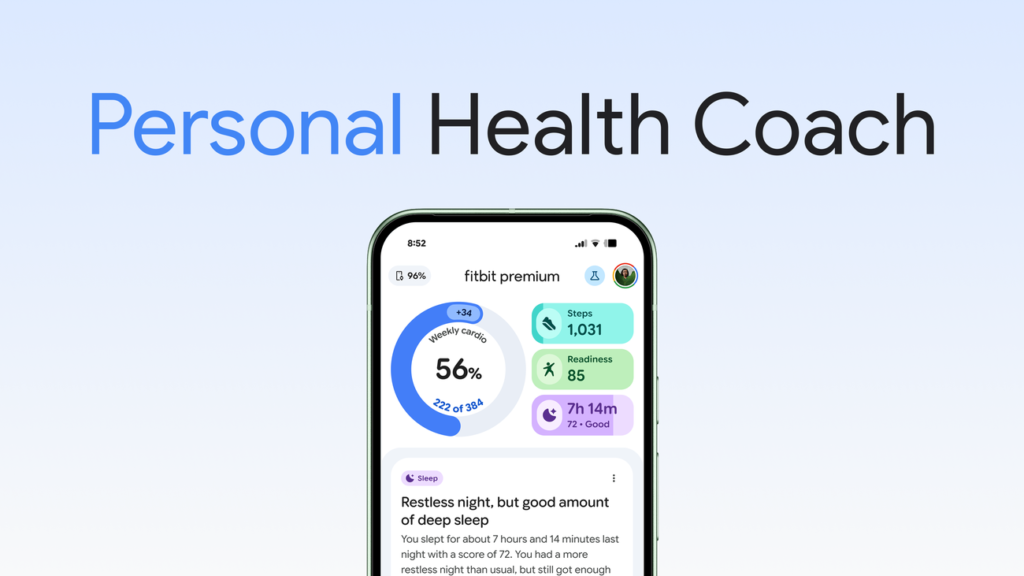
Fitbit is getting serious about becoming your personal health coach. The fitness tracker now connects to your medical records and has much better sleep tracking. The AI coach can give you advice based on your actual health data, not just generic tips.
Google announced these updates at The Check Up, its annual health event. The company wants to move beyond simple step counting to real personalized health guidance. Your Fitbit can now see your lab results, medications, and doctor visit history to give better advice.
How does it work?
The biggest change is medical record integration. Starting next month, US users can link their health records directly to the Fitbit app. You search for your healthcare provider and connect to their portal, or use CLEAR to verify your identity and automatically find your records.
The system uses IAL2-certified security standards. You just take a selfie and show a valid ID. Then Fitbit finds and syncs records from different providers automatically.
Sleep tracking got a major upgrade too. Fitbit’s new models are 15% more accurate at detecting sleep stages. The AI better understands when you’re trying to sleep versus actually sleeping. It catches interruptions, naps, and transitions more precisely.
The Sleep Score is completely redesigned. Instead of one generic number, it breaks down specific aspects of your rest:
- How much deep sleep you got
- How long it took to fall asleep
- Sleep interruptions and their impact
- Recovery quality metrics
Why does it matter?
Generic health advice doesn’t work well. When Fitbit knows your cholesterol levels, blood pressure, and medications, it can give much better guidance. Ask “How can I improve my cholesterol?” and the coach summarizes your actual lab results, not general information.
This could catch health problems early. Google published research in Nature showing wearables can predict insulin resistance. Combined with medical records, the AI coach might spot concerning patterns before they become serious.
Sleep improvements matter because most fitness trackers are pretty bad at sleep detection. A 15% accuracy boost means the difference between useful data and meaningless numbers. Better sleep data leads to better coaching on recovery and health habits.
You’ll also be able to connect continuous glucose monitors next month. Ask your coach how that workout or slice of pizza affected your blood sugar levels. Real data beats guessing.
The context
Google is pushing hard into healthcare through Fitbit. The company faces tough competition from Apple Watch, which already integrates with health records in some hospitals. This update helps Fitbit catch up and go further.
Privacy concerns are real when fitness trackers access medical data. Google says your records are stored securely with Fitbit and won’t be used for ads. You control how data is shared or deleted. The company published specific privacy commitments for health data.
The timing matters too. Healthcare costs keep rising and doctors have less time with patients. AI health coaches could fill some gaps, but only if they have good data to work with. Medical records plus wearable data is much more powerful than either alone.
These features roll out gradually. Sleep improvements start in the next few days for Public Preview users. Medical records and the new Sleep Score come next month. The continuous glucose monitor integration launches in early 2024.