
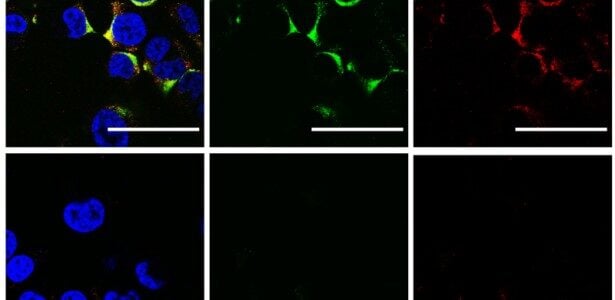
Brazilian researchers have found a way to destroy viruses using nothing more than sound waves. The technique works like acoustic warfare against pathogens – high-frequency ultrasound causes viral particles to vibrate until they literally explode.
Scientists at the University of São Paulo tested the method against SARS-CoV-2 and H1N1 flu viruses with promising results. The sound waves destroyed the viruses completely while leaving human cells unharmed. This could open new doors for treating viral infections, especially as traditional antiviral drugs remain notoriously difficult to develop.
How sound waves destroy viruses
The process works through acoustic resonance – the same principle that can shatter a wine glass with the right musical note. When researchers blast viruses with ultrasound at frequencies between 3-20 MHz, the viral particles absorb the sound energy and start vibrating internally.
“It’s kind of like fighting the virus with a shout,” explains Odemir Martinez Bruno, the physics professor who led the study. “We proved that the energy of sound waves causes morphological changes in viral particles until they explode, a phenomenon comparable to what happens with popcorn.”
The technique specifically targets the protective envelope that surrounds many viruses. As this membrane ruptures and deforms, the virus can no longer invade human cells. The results were published in Scientific Reports.
Why virus geometry matters
The discovery initially puzzled researchers because it contradicts basic physics. Ultrasound wavelengths are much longer than viruses, which should theoretically prevent any interaction between them.
The secret lies in viral geometry. The method works because many dangerous viruses happen to be spherical:
- Spherical particles absorb ultrasound energy more effectively than other shapes
- Energy accumulates inside the particle until the viral envelope ruptures
- Triangular or square viruses wouldn’t experience the same “popcorn effect”
- The process depends on shape, not genetics – so viral mutations don’t affect the technique
This geometric requirement explains why the method works against COVID variants like Omicron and Delta. Since these variants maintain the same spherical shape as the original virus, they remain equally vulnerable to acoustic destruction.
Different from existing ultrasound sterilization
Ultrasound already gets used to sterilize medical equipment, but this new technique works through a completely different mechanism. Existing methods rely on cavitation – the collapse of gas bubbles that destroys both viruses and healthy tissue.
Acoustic resonance operates at much higher frequencies and targets only viral structures:
- Cavitation uses low frequencies and destroys everything
- Acoustic resonance uses high frequencies (3-20 MHz) and selectively targets viruses
- The new method doesn’t change temperature or pH levels
- Human cells remain completely unaffected
“The result is a selective and safe mechanism since only the virus absorbs the energy and is destabilized, posing no risk to human cells,” Bruno notes.
Expanding to other viral diseases
The research team is now testing their acoustic approach against other mosquito-borne viruses including dengue, Chikungunya, and Zika. All of these pathogens have the spherical, enveloped structure that makes them vulnerable to sound wave destruction.
The method offers several advantages over traditional antiviral development:
- No chemical waste or environmental impact
- Viruses can’t develop resistance to physical destruction
- Works against multiple virus types with similar structures
- Simpler than developing specific chemical compounds
“Although it’s still far from clinical use, this is a promising strategy against enveloped viruses in general, since developing chemical antivirals is complex and yields difficult results,” says Flávio Protásio Veras, a collaborating researcher.
The interdisciplinary study brought together physicists, virologists, and specialists in inflammatory diseases from multiple Brazilian institutions. Nobel Prize winner Charles Rice from Rockefeller University also contributed by providing fluorescent viruses that allowed real-time visualization of the destruction process.
While clinical applications remain years away, the research represents a novel approach to fighting viral infections through pure physics rather than chemistry or biology.