
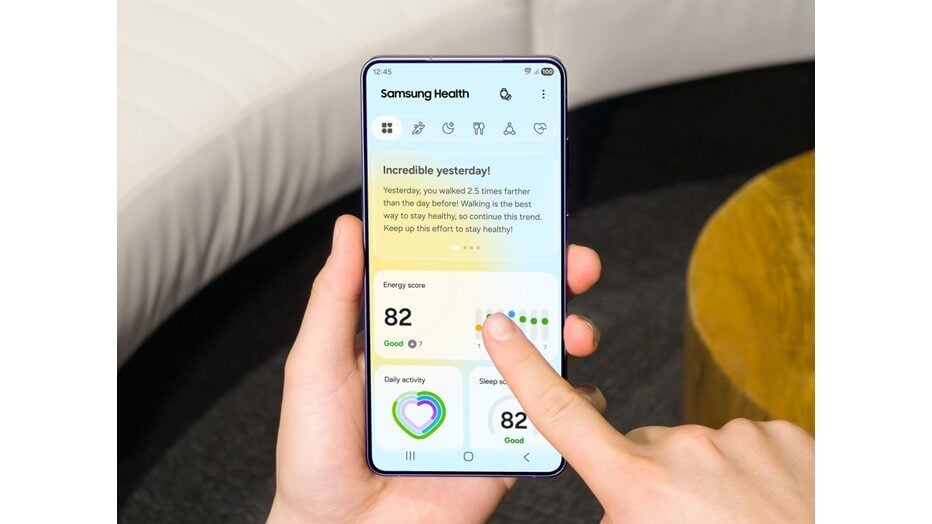
Samsung is giving its Galaxy Watch a major health overhaul that finally addresses what most fitness trackers get wrong: turning mountains of biometric data into advice you can actually use. The company announced today that its Samsung Health app will get smarter AI features that focus on practical guidance rather than just tracking numbers.
This matters because most wearables overwhelm users with charts and metrics without explaining what any of it means. Samsung’s approach shifts from passive monitoring to active coaching. The update rolls out June 8 and represents Samsung’s biggest push yet to compete with Apple Watch’s health features, which have long been considered the gold standard in consumer health tech.
Four new features that actually sound useful
Samsung’s health upgrade centers on four main additions that work together to create a clearer picture of your daily wellness:
- Vitals: Analyzes five overnight bio-signals (heart rate, heart rate variability, respiratory rate, skin temperature, and blood oxygen) and only alerts you when something meaningful changes. No more notification spam about minor fluctuations.
- Heart Health Score: Combines sleep, stress, activity, and body composition data into one daily number that shows how your habits affect long-term heart health.
- Daily Cardio Load: Measures how much cardiovascular strain you’ve accumulated and recommends when to push harder or take a break during workouts.
- Fitness Index: Compares your heart rate, VO2 max, and daily steps against similar users to identify strengths and weaknesses in your fitness routine.
Why this approach might work better
The key difference is Samsung’s focus on reducing “alert fatigue” – the problem where fitness trackers send so many notifications that users start ignoring them all. Instead of alerting you every time your heart rate changes, the Vitals feature establishes your personal baseline and only speaks up when something actually noteworthy happens.
This builds on Samsung’s existing Energy Score feature, which already tried to simplify health data into a single daily metric. The company says these new features will help users “understand their physical and mental condition more easily and intuitively,” according to Hon Pak, who leads Samsung’s digital health team.
Better design and ecosystem integration
Samsung is also redesigning the Health app around five core areas: Sleep, Activity, Nutrition, Mindfulness, and Vitals. The new layout puts daily wellness tips and your AI-powered Energy Score front and center, so you can quickly see how different parts of your routine connect.
The company is also adding new features that work across multiple Galaxy devices:
- Enhanced Antioxidant Index: Better tracking of nutritional intake with trend charts showing how diet affects your body over time
- Improved AGEs index: Automatic overnight measurements that build a long-term picture of how lifestyle choices impact your health
- Hearing Health: Uses Galaxy Watch to monitor ambient noise levels and protect your ears during loud commutes or workouts
The bigger health tech battle
This update positions Samsung to compete more directly with Apple Watch’s health features, which have set the bar for consumer health monitoring. Apple has been adding medical-grade features like ECG monitoring and fall detection, while also focusing on making health data more actionable through its Health app.
Samsung’s approach appears focused on AI-powered insights rather than adding more sensors. This makes sense given that most users already struggle to interpret the data from existing sensors. By making the software smarter rather than the hardware more complex, Samsung might find a more sustainable path to health tracking that people actually stick with long-term.
The new features will debut on Samsung’s upcoming Galaxy Watch models, though the company hasn’t announced a specific launch date for the new hardware yet.