
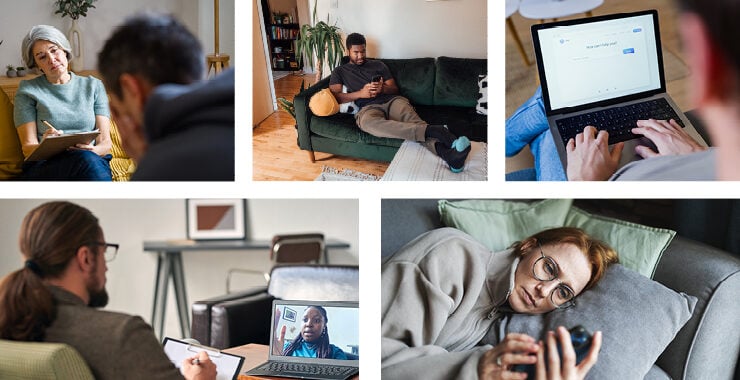
More than three-quarters of licensed psychologists in the United States say their patients have brought up using AI for mental health support. That is the headline finding from the American Psychological Association’s 2026 Chatbots and Mental Health Survey, which gathered responses from more than 1,200 psychologists directly involved in patient care.
The survey captures something many clinicians have been noticing in their sessions: patients are not waiting for their weekly appointment to process difficult emotions or seek guidance. They are turning to chatbots between sessions, and in some cases instead of sessions altogether. For a country still facing a serious mental health care shortage, that shift has real consequences.
The findings land at a moment when generative AI is woven into daily life for millions of people. Patients are using these tools at work, at home, and now, increasingly, to manage their mental health. The question psychologists are wrestling with is not whether this is happening, but whether it is safe.
The numbers tell a complicated story. A third of psychologists said their patients use AI to help with therapy or treatment, and a similar share said patients use it for self-discipline, affirmations, or behavioral reminders. Those are relatively contained uses. More striking is that 35% of psychologists reported patients using AI as an additional mental health professional, a role these tools were never designed to fill.
Some patients appear to have formed genuine attachments to chatbots. Psychologists reported patients engaging with AI:
- For fun (33%)
- For friendship (22%)
- For intimate relationships (13%)
Among psychologists whose patients had developed some kind of relationship with a chatbot, many saw short-term benefits. About 71% said patients talked openly about their mental health with the AI, and 68% said patients felt validated or supported. Half said they noticed positive communication patterns. But a quarter said the communication was unhealthy, more than a third saw signs of dependency, and 15% observed distorted thinking or delusions tied to chatbot use.
Nearly every psychologist surveyed expressed concern about the safety of these tools. Ninety-seven percent said chatbots may accidentally reinforce negative behaviors or delusional beliefs. Ninety-four percent said current chatbots cannot handle mental health conditions with enough nuance. And 89% worried that chatbots might inadvertently encourage self-harm, pointing to cases where AI failed to recognize that a user was in crisis.
A big part of the problem is that most consumer chatbots are not built with mental health care in mind. They are not mandated reporters. They do not carry the legal or ethical responsibilities of a licensed clinician. And they are designed to be agreeable, which psychologists see as a direct risk. When a patient turns to AI and the AI validates whatever they are already thinking, it can reinforce exactly the kind of distorted thinking that therapy is meant to address. Psychologists call this the sycophancy trap.
The APA highlights a few specific things people should understand about how AI works before using it for anything health-related:
- AI tends to agree with you. It reinforces your perspective rather than challenging it.
- AI can sound confident even when it is wrong. A clear, decisive tone does not mean accurate information.
- AI generates responses based on patterns in language, not on clinical judgment or personal context.
Privacy is another sticking point. Ninety-four percent of psychologists said they do not trust tech companies to protect patients’ private mental health data, and 77% said they feel strongly about that. When someone shares symptoms, test results, or personal history with a chatbot, that information is not protected in the same way it would be in a clinical setting.
Still, the picture is not entirely negative. Just over half of psychologists said they were comfortable with some of their patients using chatbots, particularly when those tools are grounded in psychological research and used alongside professional care. Forty-seven percent said AI will likely make mental health professionals more effective, and 40% were optimistic that chatbots could help patients when a professional is not available.
Familiarity with AI appears to shape those views significantly. Psychologists who use AI regularly at work are much more optimistic: 79% of frequent work users said AI would make professionals more effective, compared to 47% overall. Only about a quarter of all psychologists consider themselves very or extremely knowledgeable about AI, which may explain some of the caution.
One finding stands out as a signal of where the profession stands: fewer than a quarter of psychologists believe patients will one day prefer therapy chatbots to human mental health professionals. Even early-career psychologists, who are generally more comfortable with technology, were less likely than their senior colleagues to believe AI can be used safely in a clinical setting. That is not a generation gap in tech comfort. It may be a sign that people closest to the work are most skeptical of handing it off to a machine.
The APA has published a practical guide for anyone already using or thinking about using AI for mental health support. Its core advice:
- Do not use AI as your only resource for mental health symptoms. Talk to a licensed professional when possible.
- Verify any health information from AI with a real clinician. Confident tone does not equal accurate information.
- AI cannot reliably diagnose mental health conditions and is known to mistake everyday struggles for clinical symptoms.
- Be honest with your therapist or doctor if you are using AI for support, so they can make sure it aligns with your treatment.
- Do not make major life decisions based on what a chatbot tells you.
- Feeling better after talking to AI does not mean you are getting better. The tool is built to feel validating, not to provide accurate clinical guidance.
The broader picture here is not that AI is useless in mental health. Used carefully, and alongside professional care, it may help people organize their thoughts, practice exercises from therapy, or find a licensed provider. The concern is what happens when it replaces that care entirely, especially for people who cannot afford or access traditional therapy. That population is large, and chatbots are cheap and available around the clock. The survey does not capture how many people are using AI as their only mental health resource, but the scale of generative AI adoption suggests the number is not small.