
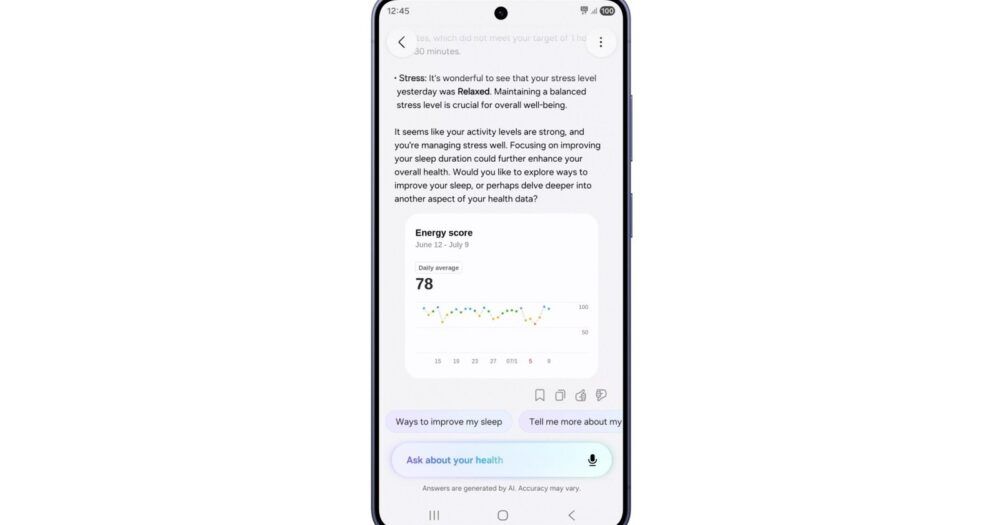
Samsung is rolling out an AI-powered health chatbot called Health Assistant, now available in beta for eligible users in the United States. The tool is built directly into Samsung Health and works across Galaxy phones, the Galaxy Ring, and Galaxy Watch devices.
The timing is deliberate. Samsung is launching Health Assistant just before its Galaxy Unpacked event on Wednesday, where new smartwatches are widely expected to appear. Getting the software side of its health story in front of people before showing new hardware is a smart move, and it signals how seriously Samsung is taking the health tracking space.
The broader picture here matters. Apple, Google, Fitbit, and Whoop have all been pushing deeper into health monitoring over the past few years. What was once a step counter is now a serious wellness platform. Samsung wants a bigger piece of that market, and Health Assistant is its answer.
What Health Assistant actually does
At its core, the chatbot helps users understand what their health data means in plain language. It pulls information from Samsung Health’s five core areas of wellness:
- Sleep
- Activity
- Nutrition
- Mindfulness
- Vitals
Users can ask the chatbot direct questions about their data and get guidance on lifestyle changes. Samsung says the recommendations have been reviewed by physicians and certified health coaches. Health Assistant can also spot patterns and signals in your data that you might not notice yourself.
It will not, however, diagnose conditions or suggest medical treatments. That boundary is important, both legally and practically, and Samsung is clear about it.
The ecosystem angle is where it gets interesting
What separates Health Assistant from similar tools at Whoop or Fitbit is how deeply it connects to the wider Samsung ecosystem. The chatbot ties into Samsung’s personalized data engine, which means it can pull context from your calendar and even your smart home devices.
A simple example: if you switched off your smart lights at 1am, Health Assistant might flag that as a potential factor affecting your sleep quality. Further down the road, Samsung says the tool will be able to suggest breathing exercises ahead of a work meeting it sees on your calendar.
This kind of cross-device context is something a standalone health app simply cannot replicate. It is a genuine advantage for Samsung, assuming users are comfortable granting that level of access.
New health metrics are coming too
Alongside Health Assistant, Samsung told Bloomberg about several other health features in the pipeline:
- Sleep monitoring that tracks heart rate and blood oxygen, then flags significant shifts overnight (Apple Watch has offered something similar for a couple of years)
- An Energy Score and Heart Health Score to give users an at-a-glance picture of their wellness
- A Fitness Index that factors in activity data, heart rate, and oxygen consumption
Samsung is also looking at clinical integration
One of the more forward-looking pieces of Samsung’s health push involves getting data out of your wrist and into your doctor’s hands. The company is building a platform that would let physicians monitor patient metrics, like blood pressure, between clinic visits.
This follows Samsung’s acquisition of Xealth, a company that connects wearable device data with clinical records. If Samsung can make that bridge work at scale, it moves from being a consumer gadget maker to a genuine player in preventive healthcare. That is a much bigger and more competitive market, but also a far more significant one.