
Four in ten calls to a medical practice go unanswered during business hours. That single statistic, drawn from a study of 7,000 calls across 22 US practices, is the problem Vocca was built to fix. And by the numbers, it appears to be fixing it fast.
Vocca, the AI platform that handles inbound patient phone calls for medical practices, has closed a $20 million Series A led by Norrsken VC, with participation from Heal Capital, Speedinvest, and Firstminute Capital. Angel investors include the founders of Alan and Datadog. Total funding now stands at $25 million.
The company processes more than one million patient interactions a month across more than 20 medical specialties in the United States and Europe. A year ago, 2,000 practitioners were using the platform. Today, that number is 15,000, spread across 1,500 practices. Revenue grew 7x over the same period; conversation volume grew 10x.
What Vocca actually does
The core product is an AI phone assistant that picks up patient calls and handles them end to end. No hold music, no voicemail, no callback queue. The system books appointments, answers questions about exams and preparation, and manages administrative requests. On average, Vocca resolves 70% of conversations without any human involvement. Its most established customers push that figure above 85%.
But the technology is not a generic voice bot dropped into a healthcare setting. That distinction matters. Practices that tried general-purpose AI tools found they didn’t understand scheduling logic specific to a given specialty. Vocca built a library of specialty-specific models that encode those rules, so a platform handling ophthalmology bookings knows the clinical difference between a routine eye exam and an urgent referral. Practices go live in days, not months.
Who is already running on it
The customer list gives a sense of the scale now in play. DAG Dental, a group with 37 practices, uses Vocca across its network. Point Vision, which runs 67 ophthalmology practices, does the same. In France, Résonance Imagerie, a network of 60 imaging centers, and the Hôpital Fondation de Rothschild, which sees 350,000 patients a year, both rely on it for intake, call handling, and appointment confirmations.
Charlotte Cardin-Taillia, Deputy General Director of Hôpital Fondation de Rothschild, put it plainly: “Vocca resolves more than 75% of calls fully autonomously. For the remaining quarter, the AI immediately transfers urgent calls to front-desk staff and calls back complex, lower-priority requests. Teams can then focus on the patients who truly need to speak with a person.”
Opal Anderson, Chief Operating Officer at DAG Dental, described a competitive evaluation across multiple tools before choosing Vocca: “It absorbs the volume and the repetition. Our teams keep the judgment calls, they’ve gained back hours a day, and our patient satisfaction has never been higher.”
Why this moment matters for healthcare AI
Administrative costs account for roughly 25% of total US health expenditure, and a significant chunk of that is tied up in phone-based scheduling and coordination. The first wave of AI in clinical settings was documentation. Ambient scribes moved from novelty to standard practice in just a few years. The second wave looks conversational, and it has one structural advantage: it doesn’t ask anyone to change their behavior. Patients keep calling. Staff keep their existing software. The AI fits around existing workflows rather than replacing them.
Nearly 46% of health workers reported frequent burnout in 2022, up from 32% in 2018. Staffing challenges were named the top concern by 58% of medical groups in a 2022 MGMA survey. So the pressure on front-desk teams is real and well-documented. A system that absorbs routine call volume without adding headcount addresses a genuine operational problem.
Where the funding goes
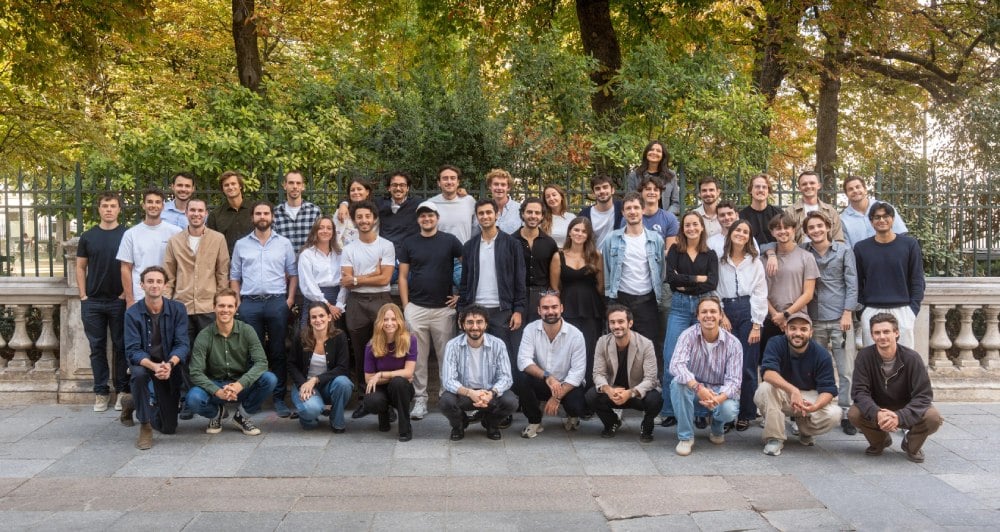
Vocca plans to use the capital to expand beyond voice into additional patient communication channels, add support for more specialties and more complex scheduling scenarios, and deepen its presence in the United States. The company currently employs around 40 people across New York and Paris and is hiring 40 more by year-end.
On the infrastructure side, Vocca runs separate production environments for US and European customers, with SOC 2, ISO 27001, and HDS certifications through its infrastructure partners. It operates as a HIPAA Business Associate for its American customers.
Alexander Danielsson, General Partner at Norrsken VC, said the decision to lead the round came down to what he heard from customers directly: “We’ve rarely seen customer love like this in healthcare. The team’s vision goes far beyond phone calls. They’re building the healthcare experience every patient wishes they had.”
Eliott Hoffenberg, CEO and co-founder, framed the clinical side of the ambition clearly: “Doctors want an AI that works like their best scheduler, follows the rules of their specialty to the letter, and fills more appointments without compromising on quality.” That’s a specific and testable claim. With 15,000 practitioners now relying on the platform, Vocca is building a data set that will either prove or pressure-test it.