
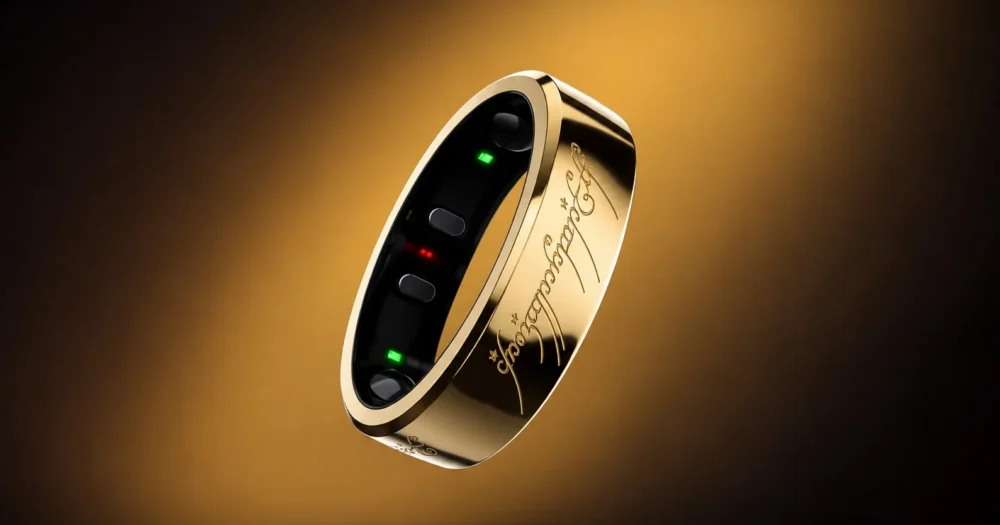
Most smart ring news is about sensors. This one is about branding, and it’s a sign of how far the category has moved. RingConn has partnered with Warner Bros. to release The One Ring, a Lord of the Rings edition of its Gen 3 tracker, laser-engraved with the Elvish script from the films. It’s a gimmick, yes. It’s also evidence that wearable rings are now mainstream enough to carry a fan-merchandise tier.
The price is $399, slightly above the standard Gen 3. For that premium you get the engraved titanium ring, a themed sizing kit and unboxing experience, and an exclusive Middle-earth skin for the companion app. The internal hardware is identical to the Gen 3 that launched earlier this year, so nobody is paying extra for better sensors.
What the hardware does
The ring is 2.3mm thick and weighs between 2.5 and 3.5 grams depending on size. The interior is lined with medical-grade epoxy resin and holds sensors for heart rate, skin temperature and motion. It is also 10ATM water-resistant, so swimming and showering are fine.
A built-in vibration motor is the more interesting feature. It sends haptic alerts to your finger when it detects high stress, prolonged inactivity or low battery. That matters for people who want nudges without a screen. A ring that taps you is less intrusive than a phone buzzing on a desk, and for patients managing sedentary habits or stress, a physical cue may be more effective than a notification you swipe away.
Health tracking and data
The software covers a familiar set of metrics:
- Overnight blood pressure trends, which RingConn calls Vascular Health Insights
- Blood oxygen levels
- Daily stress
- Menstrual cycle tracking
- Sleep apnea pattern tracking
- Automatic workout detection
A caveat for clinicians and patients: trend data from a consumer ring is not a diagnosis. Blood pressure trends and apnea patterns can flag something worth raising with a doctor, but they don’t replace a cuff reading or a sleep study. The framing as insights rather than measurements is deliberate.
Data syncs with Apple Health and Google Health Connect, which helps if you already use other apps. The ring can also store up to 10 days of data offline, so a missed sync doesn’t leave gaps.
Battery life
Battery is where small rings usually struggle, and RingConn’s numbers are strong. The company claims 11 to 14 days per charge with vibration alerts disabled, or 10 to 12 days with them on. A full recharge takes about 90 minutes. The wireless charging case holds roughly 150 days of standby power, which is useful for travel.
Those are manufacturer figures, and real-world results usually run lower with heavy use. Still, the gap between alerts on and off is small, which suggests the haptics aren’t a big drain.
Pricing and availability
Pre-orders opened on November 19th. The ring is available in select markets across North America, EMEA and Asia Pacific.
Why it matters
Smart rings are crowding fast. Rogbid recently launched its VitalRing with ECG and SpO2 tracking in a titanium alloy build, and Oura keeps iterating on its own line. When hardware starts to look alike, companies compete on subscriptions, accuracy claims and, now, design partnerships. A licensed edition lets RingConn reach buyers who might never read a spec sheet.
For health buyers, the practical advice is simple. If you want a Gen 3 and like the theme, the extra cost buys you cosmetics. If you don’t, the standard model delivers the same tracking for less.