
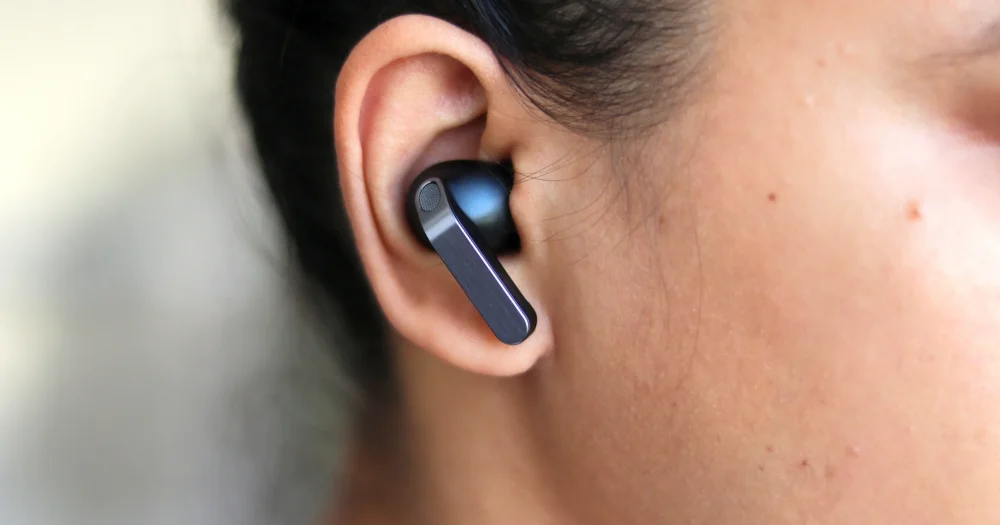
The most common reason people skip hearing aids is not cost. It is that they never get tested in the first place. Samsung is betting that a pair of earbuds many people already own can close part of that gap.
The company says the Galaxy Buds 3 Pro and Galaxy Buds 4 Pro will soon work as hearing aids, with the feature rolling out in early 2027. South Korea’s Ministry of Food and Drug Safety (MFDS) has now approved the software as a digital medical device. That follows an earlier approval from the US FDA this year.
Two features are involved. Hearing Check is a hearing test, and Hearing Care is the amplification function. Both live in the Galaxy Buds settings menu on a connected Galaxy smartphone, so there is no separate app or device to buy.
The test method matters here. Samsung says it is built on pure-tone air conduction audiometry, a clinical standard. The earbuds play tones at different frequencies and find the quietest sound the user can hear in each ear. The system then produces a personalized audiogram and sorts hearing ability into six levels. Based on the result, users get recommendations and follow-up guidance suited to their severity.
The amplification side uses NAL-NL2, a prescription formula developed by Australia’s National Acoustical Laboratories and widely used in clinical fitting. The earbuds calculate the right amount of gain for each frequency band and boost only the sounds the wearer struggles to hear. That is different from simply turning up the volume, which can make everything louder and more fatiguing without improving clarity.
Hearing Care is intended for adults aged 18 and older who suspect mild-to-moderate hearing loss. Users can set up their own hearing assistance without visiting an audiologist. That limit is important. People with severe or sudden hearing loss still need a clinical evaluation, and the built-in guidance is meant to point them in that direction.
The bigger picture is a shift in how hearing care is delivered. In the US, the FDA created an over-the-counter hearing aid category in 2022 to lower barriers for adults with mild-to-moderate loss. Apple brought a similar capability to AirPods Pro, and other consumer audio makers have been moving the same way. Samsung’s approvals put it firmly in that group, and the MFDS clearance extends its reach beyond the US market.
For clinicians, the appeal is early detection. Untreated hearing loss is linked to social isolation and cognitive decline, yet many people wait years before seeking help. A test that takes a few minutes on hardware people already wear could bring more patients into the system sooner. Whether those results translate into proper follow-up is the open question.
Consumer earbuds will not replace custom-fitted devices for people with more complex needs. But for the large group with mild loss who would never book an appointment, a familiar product with clinical-standard methods behind it is a practical option. We will learn more once the rollout begins in early 2027.