


Rock Health: Digital health companies raised $3.5B in H1 2017
This spectacular figure was propelled by the record-shattering second quarter, and a record seven deals over $100M.

IDC: Xiaomi and Apple lead the wearables market in Q1 2017
A total of 24.7 million wearable devices have been shipped in Q1 2017, up 17.9% from the 20.9 million units shipped in the same period last year.

Study finds Fitbit heart rate-tracking devices to accurately track sleep stages
Analysis of over 4 billion nights of Fitbit sleep data supports scientific theories that sleeping 7+ hours can positively affect sleep quality.

Study finds fitness trackers accurately measuring heart rate but not calories burned
Six of the seven devices measured heart rate with an error rate of less than 5%, but none measured energy expenditure accurately.
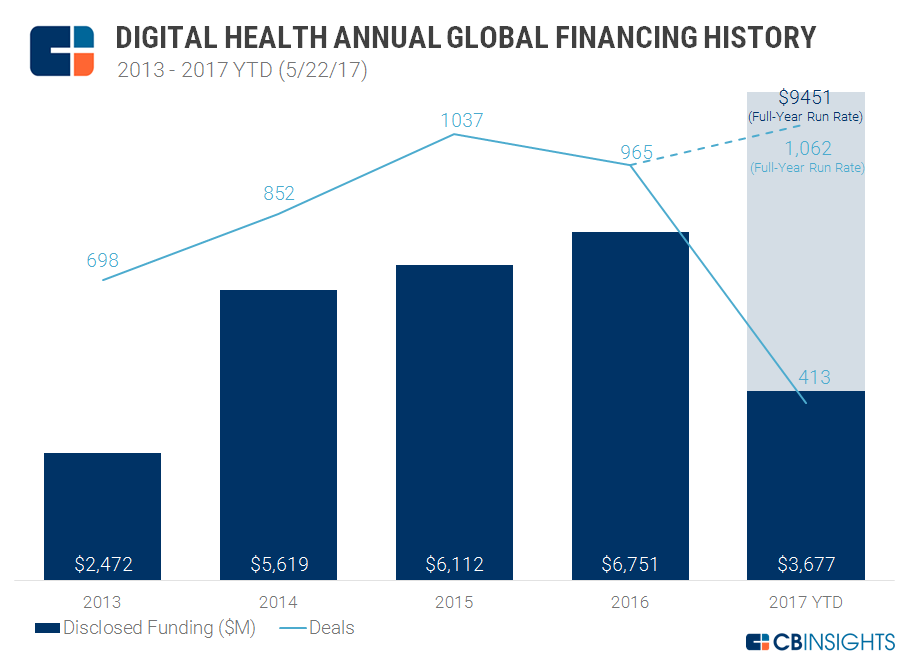
CB Insights: 2017 digital health deals hit $3.67B
The number of deals fell for the first time in 4 years in 2016, but global funding into the sector grew for the 7th straight year.

HealthMine: Health plans don’t understand their members’ health very well
73% of health plan members believe their plan's communications are impersonal and 60% want more communication about healthcare guidance rather than bills.

5 reasons why digital health startups and accelerators struggle to connect
The fault is on both sides, according to the research firm Research2Guidance.

IDC: Wristwear to dominate the wearables by 2021
Worldwide wearable device shipments will grow from 102.4 million in 2016 to 237.5 million in 2021, representing a five-year CAGR of 18.3%.

mHealth apps were the most funded health IT tech since 2010
The entire sector received $18.5B in VC funding and almost $7.5B in debt and public market financing, bringing the total funding for the sector to $26B.

ATA updates two of its reports, Texas keeps the spot at the bottom
The reports identified gaps in coverage and reimbursement, and physician practice standards and licensure across the United States.