

When two former Calm employees noticed that AI interactive audio was their mental health app’s most popular feature, they realized they had spotted something bigger. Now they’ve turned that insight into The Path, an AI therapy app that promises to be safer and more effective than using ChatGPT for mental health support.
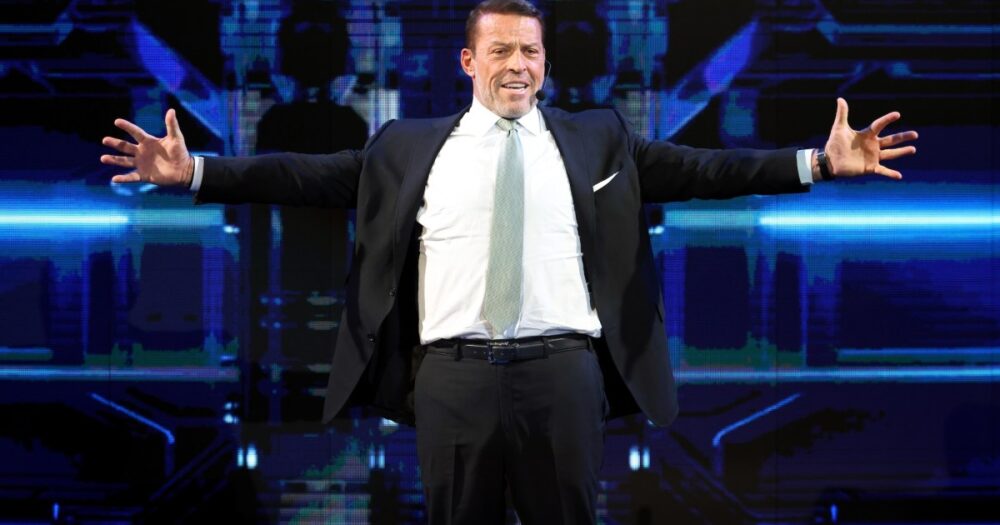
The startup just raised $14.3 million in seed funding led by Prime Movers Lab, with participation from speed skater Apolo Anton Ohno, boxer Deontay Wilder, and Designer Fund. But the most notable addition to the team is motivational speaker Tony Robbins, who joined as co-founder after becoming enthusiastic about the project.
From tragedy to mission
CEO Anson Whitmer’s path to mental health tech started with personal loss. When he was 19, his uncle died by suicide. Later, while pursuing a PhD in psychology, he lost a cousin the same way after missing warning signs in a voicemail.
“I didn’t realize until it was too late. It was also a call for help, and he killed himself,” Whitmer recalls. These experiences shifted his focus from academic research to bringing mental health solutions directly to people who need them.
Working at meditation app Calm was a natural first step, but Whitmer felt limited by the one-size-fits-all approach. “People’s problems are just too idiosyncratic. They’re too personal. They’re unique,” he says. The bigger issue: there simply aren’t enough human therapists to meet global demand.
Why consumer AI isn’t enough
The need is clearly there. OpenAI reports that 900 million people use ChatGPT for mental health queries every week. But Whitmer argues that consumer chatbots are “optimized for engagement” rather than actual therapeutic progress.
Regular AI assistants try to solve problems quickly and reinforce users’ existing ideas to keep them coming back. “But therapy and coaching doesn’t work that way. You’re trying to understand the problem deeply,” Whitmer explains. Real therapeutic work involves challenging assumptions and helping people discover their own solutions.
Building AI that challenges instead of validates
The Path’s approach centers on an AI model specifically trained for mental health applications. The company claims it scored 95 on the Vera-MH mental health safety benchmark, compared to just 65 for consumer chatbots.
Key differences in The Path’s AI include:
- Post-training from open source models rather than wrapping existing consumer LLMs
- Design to challenge users rather than simply agree with them
- Focus on creating structure for long-term resolution rather than quick fixes
- 11 different virtual AI therapists with customizable interaction styles
Tony Robbins enters the picture
After Prime Movers Lab invested, Tony Robbins began offering advice on branding and strategy. As his involvement grew, Whitmer and co-founder Tyler Sheaffer invited him to join as co-founder. Robbins has since helped shape The Path into a therapy-plus-coaching app that incorporates his self-improvement methods.
The app is currently free while building its user base, but the company plans to charge $40 monthly once it transitions to a paid model. This pricing puts it between basic meditation apps and traditional therapy sessions, reflecting its position as a middle ground between automated wellness tools and human professional care.