

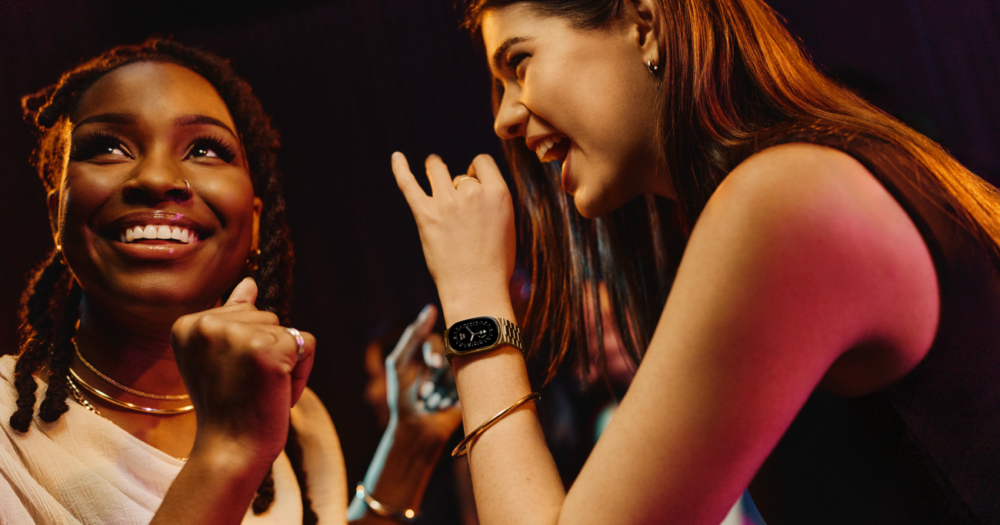
Women’s health tracking has always had a fragmentation problem. Cycle data lives in one app. Sleep and heart rate variability live in another. And the connection between them, which is clinically meaningful, gets lost. Google Health and Flo Health are now betting they can fix that.
Google has announced a multi-year strategic partnership with Flo Health, the period and fertility tracking platform used by more than 80 million people monthly. The deal is structured around four areas: cross-app data syncing, integration with Google’s AI coaching layer, joint research into underserved women’s health topics, and co-developed hardware products. It is one of the more substantive women’s health commitments a major tech platform has made in recent years, and the scope goes well beyond a simple data-sharing agreement.
What the integration actually does
Starting early next year, users will be able to sync Flo Health with the Google Health app. With explicit consent, cycle data logged in Flo, including period dates, symptoms, and phase information, will be combined with biometrics captured by Google’s wearables: resting heart rate, heart rate variability, skin temperature, and sleep stages. The goal is a single, consolidated health view that connects reproductive cycle phases to daily readiness and recovery signals.
Google Health Coach, the AI-driven guidance layer available through Google Health Premium, will also pull in Flo data. So instead of generic sleep advice, a user in the luteal phase of her cycle could, in theory, receive coaching that accounts for the physiological changes typical of that window. For perimenopause specifically, where sleep disruption and heart rate variability shifts are common and often misread, this kind of contextual layering has real clinical potential.
The research agenda is worth watching
Beyond the consumer product, the two companies say they plan to collaborate on research into areas they describe as underserved. The listed topics include perimenopause, polyendocrine metabolic ovarian syndrome (PMOS), pregnancy, and postpartum recovery. These are not niche conditions. Perimenopause alone affects every woman who lives long enough to reach it, and the research base for managing it with digital health tools is still thin.
Whether the research outputs will be peer-reviewed, published, or used primarily to train proprietary models is not yet clear. That distinction matters, both for scientific credibility and for how clinicians should eventually interpret any guidance the platform produces.
Privacy architecture as a feature, not a footnote
Reproductive health data carries legal and personal risk that general wellness data does not. Google’s announcement is explicit about the opt-in structure: no data moves between apps without separate, explicit permission for each data type and each purpose. Flo data shared with Google will not be used for advertising, will not be sold, and will not be available to third-party developers through Google’s health platforms.
That is a stronger set of constraints than most data-sharing arrangements include. Still, commitments made at launch and the technical enforcement of those commitments over a multi-year partnership are different things. Users and clinicians should watch how this holds up as the product evolves.
Why this deal fits a larger shift in women’s health tech
The partnership reflects a broader correction happening in digital health. For years, wearables and health apps were built on population data that skewed heavily male. Cycle-aware features were add-ons, not architecture. What Google and Flo are describing is a platform designed from the start around the complexity of female physiology across different life stages.
- Cycle-synced biometric data for daily readiness and recovery
- AI coaching adjusted for menstrual phase and life stage
- Joint research into perimenopause, PMOS, pregnancy, and postpartum health
- New hardware products built with Flo’s algorithms integrated from the ground up
For clinicians, the most useful development may not be the coaching features but the longitudinal data this integration could generate. Continuous biometrics mapped against cycle phases, at scale, could eventually inform clinical guidance in ways that current retrospective studies simply cannot. That potential is real. But it will take time, rigorous methodology, and genuine transparency about how the data is used to get there.