

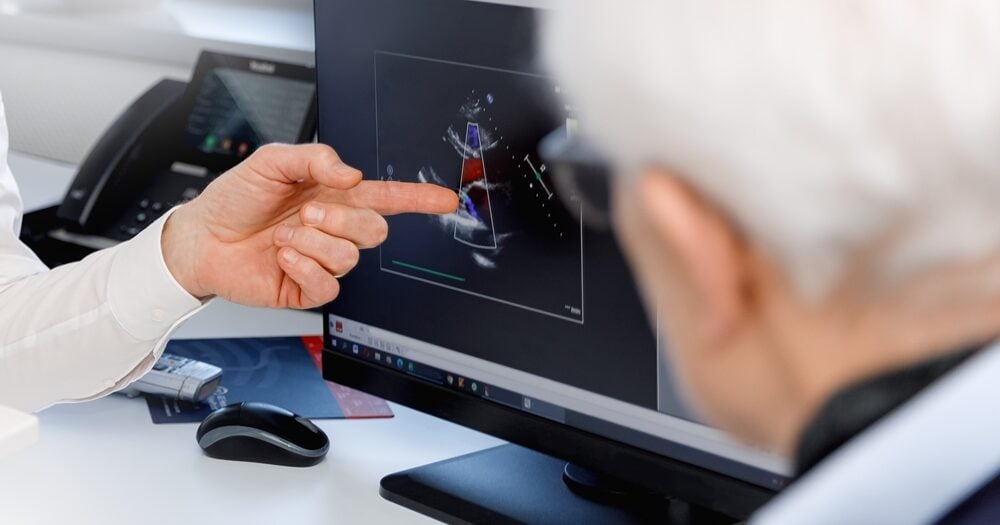
Cardiac imaging in the cath lab still depends heavily on the skill of the person holding the probe. That is a problem Laza Medical wants to engineer away, and investors have just handed the company up to US$160m in Series B financing to try.
The California-based company is developing an AI-powered robotic imaging system that gives real-time views of the heart and guides clinicians through procedures in cardiac catheterisation laboratories. Its product, the Laza Medical System, is aimed at structural heart interventions, electrophysiology procedures and diagnostic examinations. It is still in development, so no clinical results have been published yet.
Who is backing it
GE HealthCare led the round, with further investment from Unorthodox Ventures, PA MedTech and AMED. GE also took part in the earlier raise, when Laza secured US$36m in December 2023. A strategic investor returning for a second, much larger cheque is a meaningful signal. It suggests the imaging giant sees Laza as more than a passing bet.
Laza is a privately held portfolio company of Shifamed, a medical innovation hub founded by entrepreneur Amr Salahieh.
How the system is meant to work
According to the company, the system uses AI algorithms to produce live views of a patient’s heart. It is also being built to walk clinicians through each step of a procedure, using echocardiography-based tracking that relies on ultrasound imaging.
The stated goals are to simplify procedures, reduce variation and widen access to cardiac care. Those are sensible targets. Structural heart and electrophysiology work often needs a skilled echocardiographer alongside the interventional team, and that expertise is scarce in many hospitals. If software and robotics can supply part of it, more centres could offer complex procedures with fewer bottlenecks.
Why the cath lab is a target
Cath labs are crowded with separate imaging tools, each with its own workflow. Jyoti Gera, chief executive of cardiovascular and interventional solutions at GE HealthCare, said that integrating imaging modalities so they work together could redefine the cath lab. She pointed to more efficient workflows now and smarter, robotic procedures later.
Salahieh was equally direct, saying the cath lab is poised for a fundamental evolution and that intelligent imaging powered by AI will play a defining role. He said the investor support validates the company’s approach and reinforces its belief that the system will streamline processes, reduce variability and improve the quality and reach of cardiac procedures.
What to watch
Funding is not evidence. Clinicians will want to see how the system performs against experienced human operators, how it fits into existing lab routines, and what it adds to procedure time and cost. Regulatory clearance will also shape the timeline.
Still, the direction is clear. Imaging, AI and robotics are converging in interventional cardiology, and a large device maker is putting real money behind that convergence. If Laza delivers, the biggest gain may not be for flagship centres. It could be for hospitals that currently lack the imaging expertise to offer these procedures at all.