

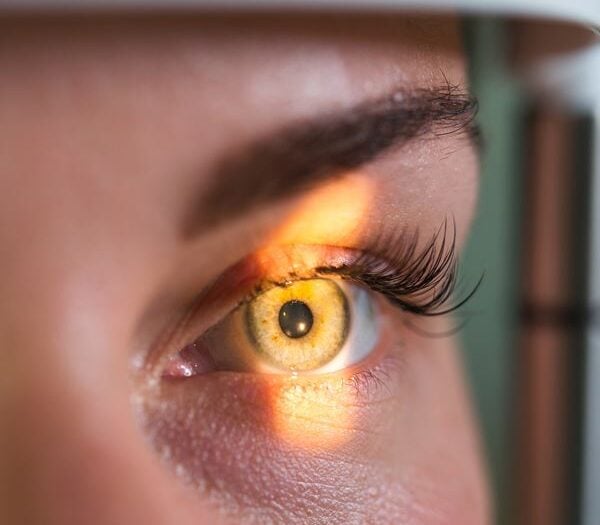
The retina at the back of your eye shares direct neural connections with the brain, and researchers have long suspected it might reveal more than just your need for glasses. Now, a study published June 16 in the Journal of Alzheimer’s Disease suggests that ordinary retinal photographs, the kind taken during routine eye exams, can accurately flag many of the risk factors linked to developing Alzheimer’s disease.
Researchers at the University of Florida, led by biomedical engineering professor Ruogu Fang, trained an AI model on retinal images from more than 40,000 patients in a UK-based medical databank. The model identified patterns in the retina tied to biological traits like sex and blood pressure, as well as lifestyle factors including smoking, alcohol use and insomnia, all of which are associated with Alzheimer’s risk.
The findings matter because Alzheimer’s is notoriously hard to catch early. Most diagnostic tools only pick it up once significant brain damage has already occurred. A low-cost screening method that works with equipment already widely used in clinics could change that.
Why the eye is a useful window into brain health
The retina is essentially an extension of the central nervous system. Its blood vessels and nerve tissue reflect changes happening elsewhere in the body, including in the brain. Alzheimer’s disease involves damage to blood vessels and neurons that can begin decades before memory loss or confusion shows up, and some of that damage appears to leave traces in the eye.
“Retinal morphology could provide measurable indicators of neurovascular integrity, which is highly relevant to Alzheimer’s disease vulnerability,” said Fang, who is also affiliated with the McKnight Brain Institute at the University of Florida.
The AI model focused on specific regions of the retina, including the arteries and the optic nerve, and detected subtle changes that would be easy to miss during a standard clinical review. Seowung Leem, a doctoral student at UF and the study’s first author, noted that AI makes it possible to spot those variations across thousands of patients at once.
What the AI model actually detected
The model was able to predict a range of risk factors from retinal images alone. These fell into two broad categories:
- Biological markers: sex, blood pressure levels, and other physiological characteristics
- Lifestyle factors: smoking history, alcohol consumption, and sleep problems like insomnia
Several of these are already recorded in patient medical charts, but those records are often incomplete. Self-reported data on smoking and drinking, in particular, tends to be unreliable. Retinal images offer something different: a physical record of cumulative damage built up over years, which varies from person to person even among those who share similar risk profiles.
Earlier detection means earlier intervention
Fang’s group had already shown in previous work that retinal photos can detect active Alzheimer’s cases. This new study pushes the concept further back in time, toward identifying people at elevated risk before the disease takes hold.
“We know that Alzheimer’s disease develops over decades, but most of the diagnostic tools focus on late-stage pathology when it is too late to intervene,” Fang said. “By looking at novel biomarkers, like retinal health, we offer new opportunities to identify patients at risk, offer appropriate tests and encourage them to develop healthy lifestyles to mitigate their risk.”
That matters because there is growing evidence that some interventions work best early. These include:
- Lifestyle changes like improved sleep, reduced alcohol intake and quitting smoking
- Certain medications that may slow progression when started early enough
- Cognitive training programs aimed at building brain resilience before damage sets in
Retinal screening would not replace more detailed diagnostic tests. But it could help doctors identify which patients are worth investigating further, long before they show any outward signs of cognitive decline.
A practical advantage over existing tools
What makes retinal photography appealing as a screening tool is how common it already is. Patients with diabetes, glaucoma or cataracts routinely have their retinas photographed. Even standard vision exams for prescription lenses sometimes include retinal images. That means the infrastructure is already in place across a wide range of clinical settings.
Compare that to the alternatives. MRI scans are expensive and not universally available. PET scans that detect amyloid plaques in the brain, one of the hallmarks of Alzheimer’s, are even more costly and typically reserved for specialist referrals. A retinal photo takes seconds and costs very little.
The research was supported in part by the National Science Foundation, and was co-authored by Adam Woods of the University of Florida and Yunchao Yang, a researcher at Meta. The team’s work adds to a growing body of research exploring what the eye can tell us about conditions well beyond vision, from cardiovascular disease to neurological decline.