

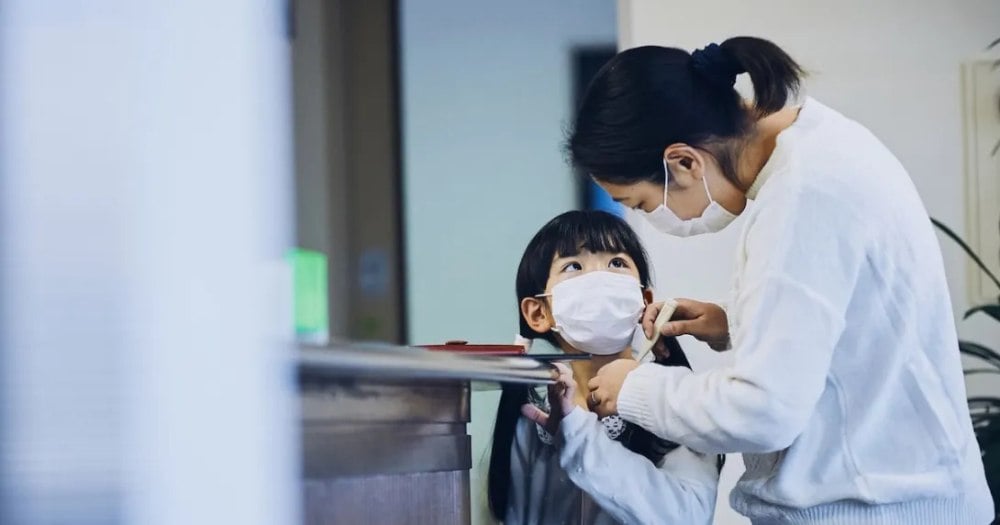
Researchers in South Korea are building an AI-powered smartphone app to help hospital staff decide whether a sick child needs emergency care. The tool reads free-text notes written by medical staff and predicts how urgent a child’s condition is before any lab results come back.
The project is a collaboration between Catholic University of Korea Seoul St. Mary’s Hospital, Korea University’s Department of Artificial Intelligence, Asan Medical Center, and medical AI company VUNO. Their findings were published in Scientific Reports.
The app is still in development, but the underlying AI model has already shown stronger predictive accuracy than the triage system currently used in Korean emergency departments. That’s a meaningful result in a country where pediatric emergency rooms are overcrowded and specialist doctors are in short supply.
How does it work?
The model uses natural language processing to read symptoms and treatment details written in free-text clinical notes inside electronic medical records. Crucially, it only uses information available before test results arrive, which is often the hardest moment to make a triage call.
The research team trained the model on records from about 87,759 patients under 18 who visited a pediatric emergency department between 2012 and 2021. Rather than using the standard five-level triage scale, they classified patients as emergency or non-emergency based on what care they actually received:
- Emergency cases were those who had at least one blood test, urine test, IV fluids, inhalation therapy, emergency medication, or hospital admission
- Non-emergency cases were those sent home with only an oral medication prescription and no testing or treatment
The model is built on Korean Medical-BERT, a local version of Google’s BERT language model trained on Korean medical text. It was then further trained on clinical notes using masked language model pre-training.
The resulting model, called KM-BERT with MLM, scored 84% on the AUROC metric and 88% on AUPRC, outperforming other machine learning models tested in the study. It also beat the Korean Triage and Acuity Scale (KTAS), the standard severity classification tool used in Korean emergency departments.
Why does it matter?
Standard triage leans heavily on structured data like vital signs and test results. The problem is that test results take time. In a crowded emergency room, staff often have to make early calls with very little to go on.
Free-text clinical notes, the researchers argue, contain early signals that structured data misses. A child’s description of pain, a parent’s account of symptoms, notes on how a child looks or behaves, these details get written down but rarely feed into any formal triage decision.
Dr. Changhee Lee, co-corresponding author and assistant professor at Korea University Medical Center, pointed out a core weakness in the current system. “When KTAS scores alone are used to predict which patients require an ER visit, the discriminative power is not sufficient,” she said. KTAS can also be inconsistent because it depends on the individual clinician’s judgment.
Dr. Woori Bae, professor and director of the Pediatric Emergency Medical Center at Seoul St. Mary’s Hospital and the study’s lead author, said the AI model appears to mirror how experienced emergency medicine specialists assess symptoms. Used in practice, he said, it could help allocate resources more efficiently and improve patient safety.
The team is now working to turn the model into a working smartphone app for medical staff. They are also planning a multi-center validation study using external datasets, and preparing additional testing with data collected after the COVID-19 pandemic to make sure the model holds up in more recent clinical conditions.
The context
Overcrowded emergency departments are a global problem, and South Korea is no exception. The pressure is especially acute in pediatric care, where children often struggle to describe their symptoms clearly, making accurate early assessment harder than it is with adults.
“There are many cases in which children are brought to the ER even when emergency care is not actually required, contributing to overload of emergency medical resources and a potential decline in the quality of care,” Dr. Lee said.
South Korea has been trying other approaches too. Last year, the Ministry of Health and Welfare piloted a 24-hour app-based pediatric counseling service called Ai Ansim Talk, which connects parents of children under 12 to specialists from three major hospitals for home care guidance. That app targets parents before they head to the ER. The new AI triage tool targets clinicians once patients have already arrived.
Together, these efforts reflect a broader push in South Korea to use technology to stretch a strained pediatric health system, where specialist shortages have made the status quo increasingly difficult to sustain.