

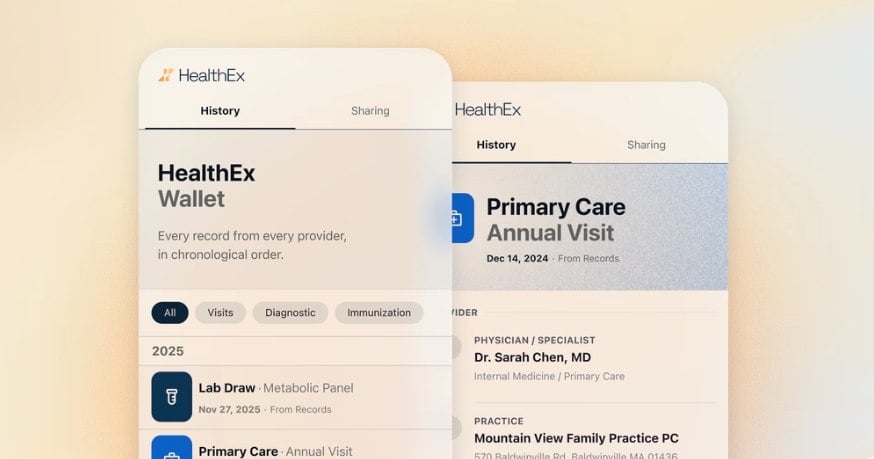
Most people using AI for their health are doing so without any real personal context. They get generic answers based on general knowledge, not their own records. HealthEx, a platform that lets individuals access and share their medical records across apps and providers, is now changing that with a connector for Muse, Meta’s new personal AI agent.
The integration, announced September 8, 2026, means a person can link their longitudinal health records to their Muse agent through HealthEx and then use that agent to do the mundane but important work that often falls apart between clinical visits. Think: drafting questions before an appointment, catching a prescription that’s about to run out, or flagging a referral that was recommended but never scheduled.
That last one matters more than it might sound. Follow-up care is one of medicine’s chronic weak spots. Patients leave appointments with instructions they intend to act on. Life intervenes. Nothing happens. The burden of continuity has historically landed on the patient, with little support. Muse, drawing on a person’s actual records through HealthEx, is designed to help close those gaps.
Why fragmented records have been such a stubborn problem
Americans’ health records are scattered across every clinic, hospital, lab, and specialist they’ve visited over a lifetime. There’s no single place to see all of it. And without portability, people can’t easily share their history with a new provider or connect it to the digital tools they already use.
HealthEx’s approach starts with identity verification. Once confirmed, the platform automatically locates a person’s records across care sites. Nothing is retrieved or shared without explicit consent. The HealthEx Wallet, a web app available to all users, gives individuals a single view of their data, shows every active connection to health apps and tools, and lets them revoke access at any time.
What the Muse connection actually does
With records connected through HealthEx, the Muse agent can offer:
- Personalized context rather than generic health information, drawing on what’s actually in a person’s history
- Proactive follow-through on loose ends already in the record, such as unscheduled referrals or low refills
- A single approval process for people who already use HealthEx Wallet, with no new portal logins or technical setup required
- Explicit check-ins before any action, so the agent doesn’t draft messages or set reminders without the person’s knowledge
The regulatory backbone behind the consent model
HealthEx operates as an Individual Access Services provider under TEFCA, the Trusted Exchange Framework and Common Agreement, which sets the standards for secure health data exchange in the US. That designation means the consent and audit trail built into HealthEx aren’t just product features. They reflect a defined legal and technical framework for how personal health data can move.
Priyanka Agarwal, co-founder and CEO of HealthEx and a former UCSF internist, put it plainly: “Individuals always stay in control, deciding what to share and when to stop.” That principle is baked into the architecture, not just the marketing language.
What this means for the broader AI health space
The integration reflects a broader shift in how AI health tools are being built. Early consumer health AI worked around the absence of personal data. The next generation is being designed to work with it, which requires solving the consent, identity, and interoperability problems that have kept records siloed for decades.
HealthEx’s approach, linking verified identity to a consent layer and then to real-time records access, is one credible model for how that infrastructure gets built. And Meta’s decision to partner with a TEFCA-compliant provider for Muse’s health data connection suggests that at least some major AI platforms are taking the regulatory and privacy dimensions seriously from the start.
Muse is available now in the US on iOS and Android and at muse.ai. Users can connect their records through HealthEx Wallet today.