

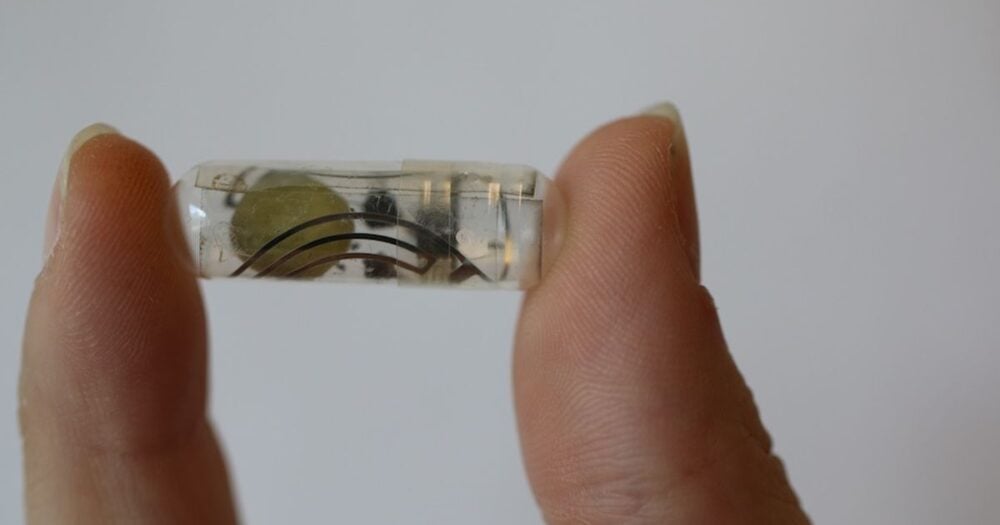
A battery that dissolves inside you sounds like a problem. MIT researchers are betting it’s actually the solution. Their new bioresorbable battery, published in Nature Chemical Engineering, powers ingestible electronics for several days before breaking down into compounds the body can safely absorb. It’s a meaningful step forward for a field that has long struggled with a basic tension: the most useful ingestible devices often need electricity, and electricity usually means materials you don’t want left inside someone.
Why powering ingestible devices has always been complicated
Swallowable electronics have been in development for years. MIT’s own research group has previously built capsules capable of tracking vital signs, delivering drugs, and detecting opioid overdoses. But keeping those devices powered is its own engineering challenge. Some designs harvest energy from the gastrointestinal tract. Others use conventional batteries, which work well enough until their casing is compromised, at which point their contents become a safety concern. So the question isn’t whether ingestible electronics can be useful. It’s whether they can be powered safely.
What the battery is made of, and how long it lasts
The new design uses magnesium as the anode and molybdenum trioxide as the cathode, both materials considered tolerable in small quantities. An ionic liquid gel acts as the electrolyte. Together, they produce 1.84 volts. In a solution mimicking stomach acid, the batteries performed normally for around three days. Output then declined gradually, with full breakdown occurring within a few weeks. That timeline is actually well-matched to most diagnostic or therapeutic applications, where a device only needs to function for a short, defined window.
Stimulating hunger hormones and tracking medication
The team tested the battery in two animal experiments. The first used a rectangular battery inside a device that applies gentle electrical stimulation to the stomach lining. Prior research had shown this stimulation prompts stomach cells to release ghrelin, the hormone associated with hunger. After just 20 minutes of stimulation, ghrelin levels rose by roughly 50 percent. That kind of effect could eventually benefit patients dealing with nausea or appetite loss, though human trials are still ahead.
The second test used a disc-shaped battery to power an RFID tag built into a medication-tracking capsule. In animals, it maintained continuous signal transmission from inside the digestive tract and extended communication range. The researchers plan to begin a clinical trial for this system, called SAFARI, within about two years.
The broader case for materials that disappear
Beyond patient safety, there’s an environmental argument here too. Ingestible devices that pass through the body and enter sewage systems carry their own downstream risks. Batteries built from degradable materials reduce that burden.
- Bioresorbable design eliminates the need for device retrieval
- Materials are considered safe in small physiological amounts
- Three-day functional window suits most short-term clinical applications
- Environmental impact is lower than conventional battery materials entering wastewater
Still, a lot of work remains before any of this reaches patients. Animal data is promising, but translating gastrointestinal electronics into clinical practice involves regulatory, manufacturing, and safety hurdles that take years to clear. What the MIT team has shown is that the chemistry is viable. That’s not a small thing. In a field where the battery is often the weakest link, building one that’s designed to disappear might be exactly the right starting point.