

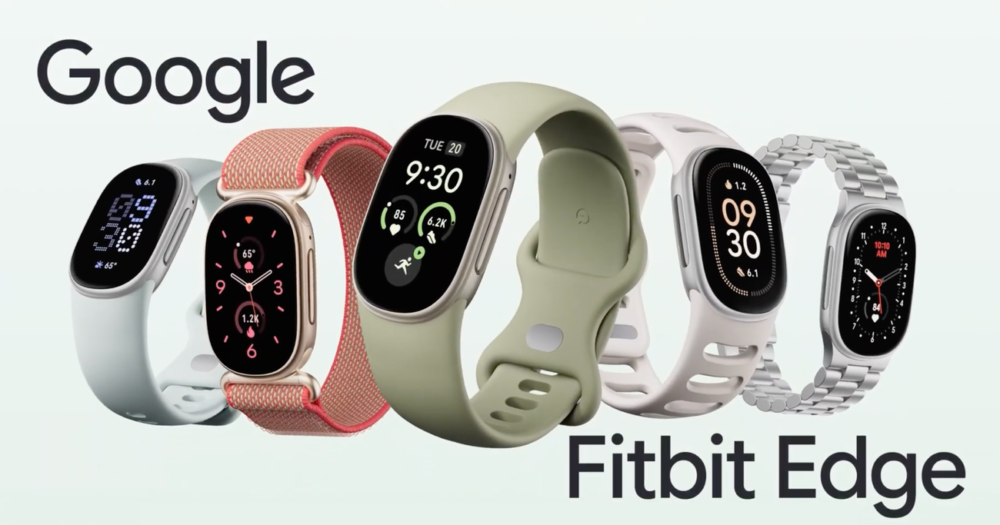
Google is betting that a large share of wearable users don’t want a full smartwatch, but won’t settle for a basic step counter either. The Fitbit Edge, announced October 12 and available for pre-order now ahead of an October 27 launch, is the company’s answer to that gap. At $179.99, it brings a meaningful set of clinical-grade health tools into one of the slimmest tracker designs on the market.
What makes this tracker different
The Edge is built around a hybrid OLED display that is 46% larger than previous Fitbit trackers, all within a case measuring 11.5mm thin. Google says the case is 45% lighter than the Apple Watch Series 12. The housing is recycled aluminum with nano-molded construction, and the device is water-resistant to 50 meters. Battery life is rated at up to seven days, with fast magnetic charging that delivers a full day of use from just five minutes on the charger when the battery is critically low.
The interface carries over from Pixel Watch 5, using glanceable tiles to surface health metrics, workout data, and everyday information like Google Maps navigation, media controls, and call notifications. A redesigned physical side button adds tactile control without requiring users to look at the screen.
Health monitoring that matters clinically
This is where the Edge becomes genuinely relevant for clinicians and informed patients. The sensor stack is substantial for a tracker in this price range:
- On-wrist ECG app for heart rhythm assessment on demand
- Continuous optical heart rate monitoring with high and low heart rate alerts
- Blood pressure trend tracking and insulin resistance trend monitoring via Health Guardian features
- Dedicated skin temperature sensor for nightly tracking
- Sleep stage analysis with HRV metrics and recovery scoring
- Built-in precision GPS with altimeter for elevation tracking
The blood pressure and insulin resistance features fall into the trend-monitoring category rather than clinical measurement. These are pattern-detection tools, not diagnostic instruments, and Google is careful with that framing. Still, for patients managing metabolic health or cardiovascular risk, consistent trend data can be useful context in a clinical conversation, especially when a physician can review longer-term patterns rather than a single in-office reading.
The Google Health Coach integration
The Edge brings the Google Health Coach, already available on Pixel Watch and the screenless Fitbit Air band, to this mid-tier device. With a Google Health Premium subscription, the coach can analyze shifts in health patterns, offer personalized lifestyle guidance, adjust fitness plans, and help users frame questions for their doctor.
That last point is worth paying attention to. Wearable coaching tools have historically been good at motivation and poor at clinical translation. Google’s framing here, explicitly positioning the coach as preparation for a doctor conversation rather than a replacement for one, reflects a more responsible approach than some competitors have taken. Whether it holds up in practice depends on how the feature is implemented, but the positioning is correct.
Fitness tracking and athletic tools
For active users, the Edge tracks over 50 exercise modes manually and automatically recognizes up to 100 workout types without requiring the user to start a session. GPS accuracy is reportedly 40% improved over the previous generation. The altimeter captures elevation data during runs, stair workouts, or hill training. Real-time guidance during exercise includes pace targets, heart rate zones, and split tracking depending on the activity.
A Stephen Curry Special Edition is also available at $219.99, featuring moisture-wicking materials and a colorway tied to his personal branding.
Repairability and availability
One detail that deserves more attention than it will likely get: the Edge is Google’s first fitness tracker with a modular internal architecture and a replaceable battery. For a consumer electronics category that generates significant e-waste, this is a meaningful design decision.
The device is available for pre-order now on the Google Store and through retail partners, shipping October 27. Purchase includes three months of Google Health Premium at no additional cost.