

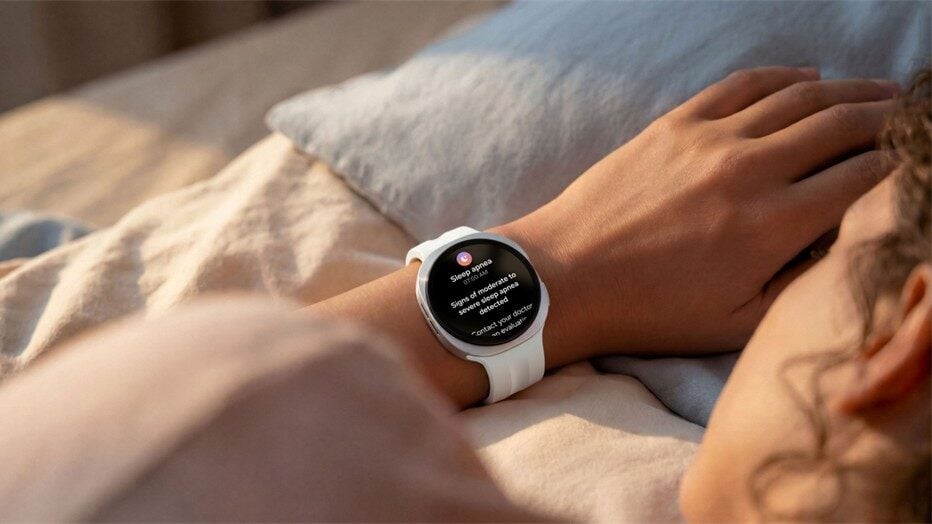
A ring is easier to sleep in than a watch. That simple fact is why Samsung’s latest move matters: the best screening tool is the one people actually wear through the night.
Samsung says its updated Sleep Apnea feature is now available on Galaxy Ring and Galaxy Watch, and that it is the first company to offer sleep apnea risk detection on a smart ring. The update has US FDA clearance from July 2026 and approval from Korea’s Ministry of Food and Drug Safety (MFDS). The original feature received FDA De Novo authorization in February 2024, the first for a wearable designed to detect signs of moderate to severe sleep apnea.
What has changed
The new algorithm analyzes vitals during sleep in more depth. It also reports the level of breathing disruption detected, rather than only flagging risk. For clinicians, that could make the conversation with a patient more concrete, though Samsung has not published performance data for the update in this announcement.
The feature runs in the Samsung Health Monitor app. It needs just two nights of valid data within a 10-day window, a low bar that should suit people who won’t commit to weeks of tracking.
Who it is for, and who it is not
This is an over-the-counter, software-only medical application. It is meant for adults 18 and older and for on-demand use. It is not for people already diagnosed with sleep apnea, and it does not replace diagnosis or treatment by a clinician.
On the watch side, it is available on Galaxy Watch 9 with Wear OS 7.0 or higher. Support for Watch 7 and 8 is coming through software updates.
Why it matters
Sleep apnea is widely underdiagnosed, and formal sleep studies are inconvenient and costly. Consumer wearables with regulatory backing can act as a first filter, pushing people toward testing who might otherwise never ask. The caveat is familiar: screening tools can raise false alarms and miss cases, so clinical follow-up still matters.
Samsung says it will expand availability to more countries. Regulatory approval market by market will determine how fast that happens, and whether rings can match watches in real-world accuracy is the question clinicians should watch.