

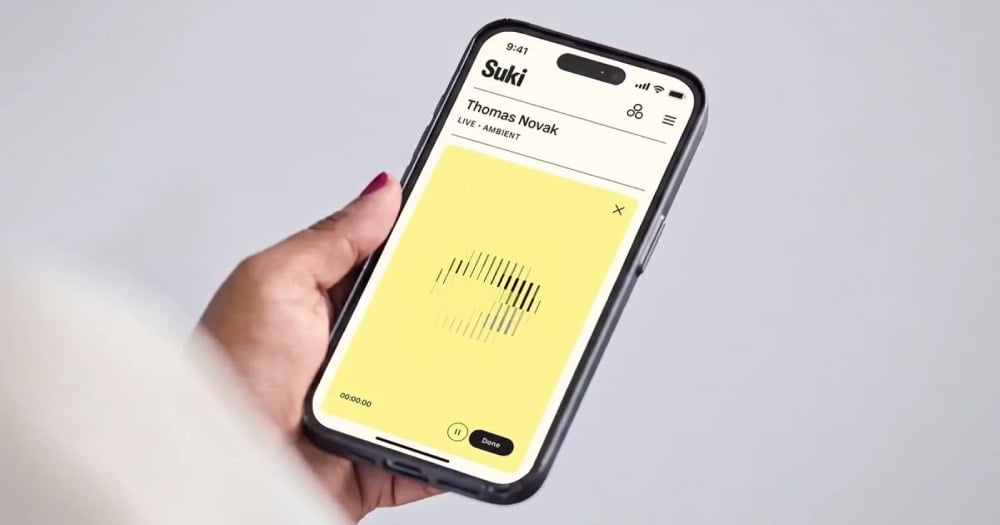
Most health systems don’t need another AI tool. They need the ones they already own to talk to each other. That is the pitch behind Suki OS, an agentic operating system announced at HLTH 2026 in Las Vegas, and it’s a sharper argument than the usual promise of faster notes.
Suki has built its name on ambient clinical documentation. Suki OS extends that foundation into patient care, operations, and revenue cycle work. The company says it is designed with security, governance, and clinician oversight at its core. The stated problem is real: as AI adoption accelerates, each standalone product risks adding another layer of fragmentation to an already disjointed technology stack.
Three pillars, one platform
Suki OS rests on three components. The Partner Ecosystem delivers outside intelligence to clinicians at the point of care through Suki for Clinicians. AI agents run multi-step workflows using clinical context. And the Suki Guarantee ties the company’s fees to customer outcomes. Suki says organizations can add new AI capabilities without replacing existing systems, and it plans to extend the platform to healthtech partners over time.
From documentation to action
Suki describes support across the whole patient journey. Some of this exists today, such as pre-visit patient summaries and documentation and orders prepared for clinician review. Much of the rest is framed as what agents could do: verify insurance eligibility before a visit, surface medication costs and prior authorization requirements during it, and address coding gaps and coordinate follow-up afterward.
Two agents come first. A Prior Authorization Agent will identify requirements, gather supporting clinical documentation, and streamline the process. A Clinical Documentation Improvement agent will look for documentation gaps and improve accuracy for coding and revenue cycle teams. More agents are planned across clinical, operational, and financial workflows, all with human oversight and enterprise governance. Note the wording, though. These are initiatives and plans, not proven products.
The partner network
Suki already powers AI features for more than 30 healthtech companies through its Platform Partners. The Insights Partners program is different: it blends partner intelligence with Suki’s patient context at the point of care. Two names are new. ECLAT uses agentic AI to analyze records and flag risk gaps, quality gaps, and screening needs. Stellar Health brings value-based care and quality measure expertise, with insights linked to monthly financial incentives for providers. Existing partners include Optum and Wolters Kluwer UpToDate, whose Expert AI will feed clinical intelligence into Suki’s workflows.
Stellar CEO Mike Meng framed the value simply: providers shouldn’t have to choose between acting on an insight and being paid fairly. That tension is familiar to any clinician asked to close quality gaps in a 15-minute visit.
Standards, Google Cloud, and UHealth
Suki is building an extensible integration framework using industry standards such as Model Context Protocol (MCP) to connect third-party apps and agents. It is also working with Google Cloud, following an initial joint hackathon, and plans to debut a patient research agent at Google Cloud’s Cancer AI Symposium 2026 in December. Separately, University of Miami Health System will join Suki for innovation workshops to prioritize workflows where agents could cut administrative burden.
A guarantee worth reading closely
The Suki Guarantee may be the most notable commercial move. Using mutually agreed metrics such as clinician adoption, engagement, coding accuracy, and HCC capture, eligible customers may recover up to 100% of their Suki fees if targets aren’t met. Terms are contractual, and measurement relies on customer-provided data. Pricing and general availability weren’t disclosed.
Why it matters
Ambient documentation is quickly becoming a commodity, and vendors are racing to prove value beyond the note. Revenue cycle tasks like prior authorization and coding are where the financial return is easiest to measure, which makes them a logical next step. Suki CEO Punit Soni argues that AI should question why so many processes exist, not just speed them up.
That is a fair ambition. But buyers should ask for evidence: which agents are live, how oversight works, and how performance is measured. A performance guarantee suggests Suki is willing to be judged on those answers.