

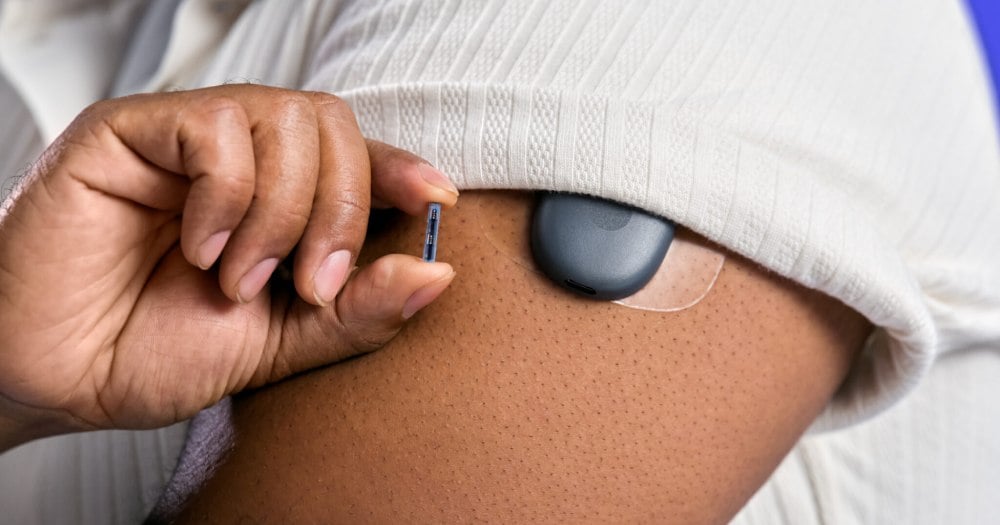
The best CGM might be the one you forget you have. Senseonics is betting on that idea with Freedom, an implantable glucose sensor that talks directly to a phone, with nothing stuck to the skin.
The company has started its first-in-human study of the investigational device. Freedom uses the same sensing technology as Eversense 365, the one-year implantable CGM. The change is an integrated battery and built-in Bluetooth, which removes the external transmitter that Eversense users currently wear over the sensor.
What the study will and won’t tell us
This is an early feasibility study. Its job is to check safety and basic device function, including whether the sensor’s direct Bluetooth link works in people. It is not an accuracy trial. Senseonics says it plans a pivotal study in 2027 and is aiming for a commercial launch in 2028. Those dates depend on clean data and FDA review, so treat them as targets.
The preclinical groundwork
In the second quarter of 2026, the company tested several Bluetooth Low Energy antenna designs and implant locations. Over about seven weeks and more than 18,500 communication data points, the preferred design reached 100% communication success within the target distance. That is encouraging. But preclinical results don’t always carry over to human tissue, movement and daily life, which is why this first human data matters.
Why it matters
Eversense 365 is the only one-year CGM, and it already reduces the sensor changes that burden users of 10- to 15-day devices. Still, the removable transmitter is a wearable that needs charging and placement. Removing it would address a common complaint about device visibility and daily upkeep.
There are open questions. A battery inside the implant raises long-term performance and safety questions that the pivotal trial will need to answer. Clinicians will also want to see accuracy over a full year without an external component, and how users receive alerts and manage insertion and removal.
Senseonics CEO Tim Goodnow said the company is leading the race to make CGM invisible. That claim will be tested by the data. For now, Freedom is a credible next step built on a sensor that is already on the market, which lowers some development risk, though not all of it.