

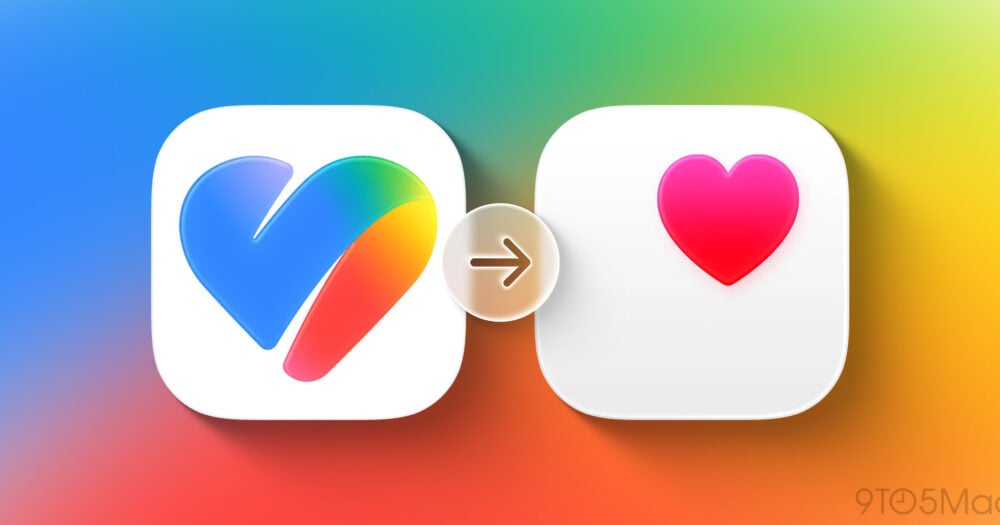
For over ten years, Fitbit users on iPhone had to accept an awkward workaround: their step counts, sleep data, and heart rate readings lived in a separate silo, cut off from Apple Health unless they used a third-party sync tool. That changes now. Google Health version 5.05 for iOS adds bidirectional integration with Apple HealthKit, meaning Fitbit data can finally flow into Apple’s health ecosystem directly.
The update is notable because Google Health already had partial integration. Since launching earlier this year alongside the new Fitbit Air line, the app could read from Apple Health, pulling in data from the iPhone, Apple Watch, and other HealthKit-connected apps. But it couldn’t send anything back. That asymmetry frustrated users who wanted a unified view of their health data in apps like MyFitnessPal, Cardiogram, or any of the hundreds of HealthKit-compatible tools clinicians and patients rely on.
Version 5.05 closes that gap. According to the release notes, users can now share exercise records, sleep, vitals, steps, and more from Google Health to Apple Health, subject to whatever permissions they configure. That last point matters. The integration is opt-in, so users retain control over what gets shared and with what apps.
The history here is worth understanding. Apple introduced HealthKit with iOS 8 in 2014, positioning it as a central hub for health data across apps and devices. Fitbit, then an independent company and the dominant wearable brand, declined to support it. The company’s position shifted over the years, but meaningful two-way integration never materialized, even after Google acquired Fitbit in 2021. The result was a persistent fragmentation problem: two large health platforms that couldn’t properly talk to each other, leaving users to manage the gap themselves.
That fragmentation has real consequences beyond convenience. In clinical and research settings, health data aggregated through Apple Health feeds into provider-facing tools, chronic disease management apps, and remote monitoring platforms. Fitbit wearables are common, especially among older adults and patients in cardiac or metabolic health programs. When that data is siloed, it simply doesn’t get used, even when it’s potentially relevant to care decisions.
Version 5.05 also adds Smart Health Links, a feature that lets users share medical records with a healthcare provider or family member. That’s a smaller but meaningful addition, particularly for patients managing complex conditions who need to share documentation quickly without printing records or logging into a portal.
The broader context is a slow but real shift toward interoperability in consumer health tech. Regulatory pressure, particularly around information blocking rules in the US, has pushed health platforms toward more open data exchange. Apple has invested heavily in making HealthKit a practical aggregation layer. Google, for its part, has signaled renewed commitment to the health space through the Fitbit Air launch and the Google Health app refresh. Bidirectional HealthKit support fits that pattern.
- Exercise records from Fitbit now sync to Apple Health
- Sleep data is included in the outbound sync
- Vitals such as heart rate and respiratory rate are supported
- Step counts and activity data transfer to HealthKit
- Smart Health Links allow medical record sharing with providers or family
- All sharing is permission-based and user-controlled
Google Health version 5.05 is available now on the App Store. For users who have been managing manual exports or paying for third-party sync tools, this update removes a friction point that should have been resolved years ago. Better late than never is a fair way to put it.