

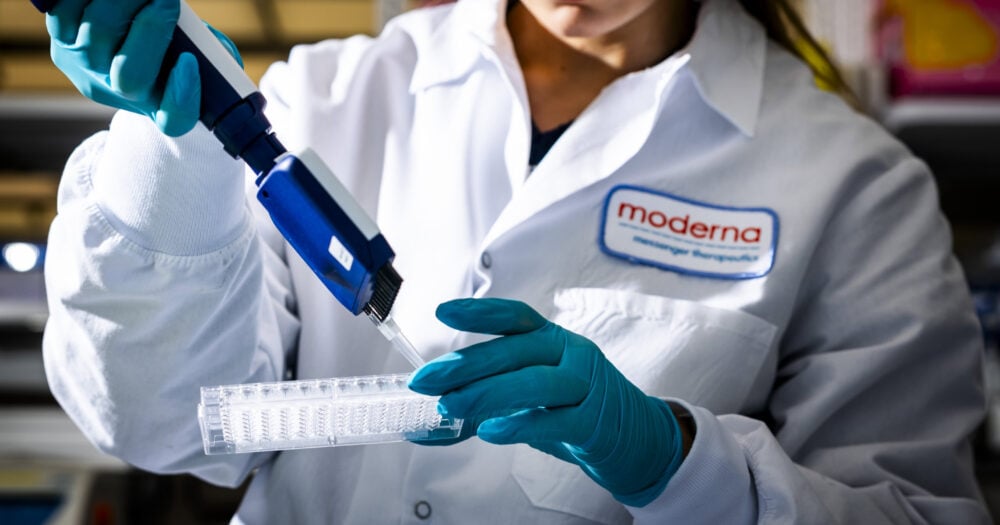
Moderna’s stock nearly tripling in a single day is the kind of market event that gets attention. But the clinical result behind that move may matter more than the share price. On Wednesday, Moderna and Merck announced that their experimental personalized cancer vaccine, combined with Merck’s checkpoint inhibitor Keytruda, met the primary endpoint of a Phase 3 trial in patients with high-risk or advanced melanoma. That’s a meaningful threshold. Phase 3 failures are common, and a positive result here is not a technicality.
What the trial actually showed
The study enrolled more than 1,100 patients with higher-risk or surgically resected advanced melanoma. Their detectable tumors had been fully removed, but they remained at significant risk of recurrence. The combination of the mRNA vaccine and Keytruda significantly extended recurrence-free survival compared with Keytruda alone. It also reduced the risk of distant metastasis. Side effects were described as similar to those of routine vaccines and consistent with the known profile of Keytruda.
These results build directly on Phase 2 data published earlier this year, which had already generated serious clinical interest. The Phase 3 confirmation changes the conversation from “promising signal” to “something regulators will need to evaluate seriously.”
Why melanoma is the right place to start
Melanoma accounts for roughly 1% of all skin cancers but is responsible for the vast majority of skin cancer deaths. Recurrence is a defining clinical problem. Most relapses happen within two to three years of initial treatment, which means patients who have already been through surgery live under a sustained threat of the cancer returning. Any treatment that meaningfully extends recurrence-free survival addresses one of the most stressful and medically consequential periods in a melanoma patient’s life.
Keytruda is already the standard of care here. So beating Keytruda alone, even in this adjuvant setting, is a real clinical result, not a low bar.
The personalized approach behind the vaccine
What makes this treatment different is its design. Every tumor carries its own mutation profile, even among patients with the same cancer type. Rather than applying a fixed antigen target across all patients, Moderna and Merck’s vaccine is built around each individual’s tumor mutations. The goal is to train the immune system to recognize and attack those specific markers, then amplify that response with Keytruda’s checkpoint blockade.
This is not a new idea. Merck and Moderna have been working on this approach for years. But moving from concept to a positive Phase 3 result is a different kind of validation.
What still needs to happen before approval
The trial is ongoing. Overall survival data, the most clinically definitive measure, has not yet been reported. The companies plan to present the full dataset at an upcoming medical meeting and will begin conversations with regulatory agencies about the path to approval. No formal submission timeline has been announced.
Still, the companies are also studying this vaccine across other tumor types, including non-small cell lung cancer, bladder cancer, and renal cell carcinoma. If the mechanism works across cancer types with high mutational burden, the clinical implications extend well beyond melanoma.
- Phase 3 primary endpoint met: significantly longer recurrence-free survival vs. Keytruda alone
- Reduced risk of distant metastasis in the combination arm
- Safety profile consistent with standard vaccines and prior Keytruda data
- Overall survival data still pending
- Regulatory discussions expected within months, no submission date set
The immediate reaction was dramatic. Moderna shares rose nearly 150% and Merck gained over 10%. But the more important question is whether this result holds up when survival data matures, and whether it translates to other cancers. If it does, personalized mRNA immunotherapy could become a serious part of adjuvant oncology care. That’s not guaranteed. But Wednesday’s result made it harder to dismiss.