

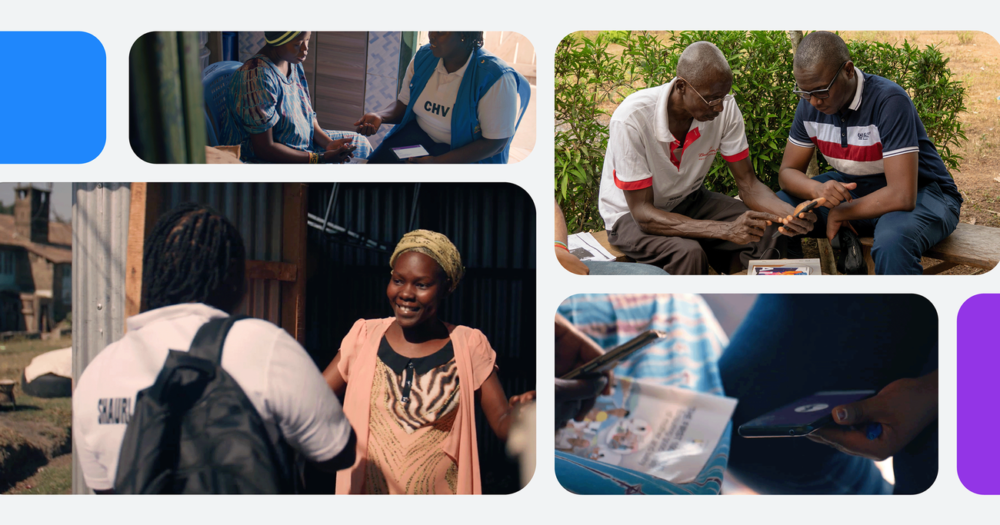
Around 4.6 billion people worldwide don’t have reliable access to basic health services. Mobile technology and AI could help change that, but the global digital health infrastructure is fragmented, making it hard to build tools that actually work at scale, especially in lower-income regions.
In 2023, Google Research partnered with the World Health Organization to release Open Health Stack, a set of open-source tools designed to help developers build digital health applications. Now Google is taking a significant next step: transferring the entire project to the Linux Foundation, which will house it under a new body called the Open Health Stack Software Foundation (OHS-SF).
The move follows a well-established pattern in open-source software. Companies often seed a project, prove its value, then hand it to a neutral foundation so no single commercial interest controls its direction. The Linux Foundation already oversees major projects like Kubernetes and Node.js. Bringing OHS-SF under that umbrella gives the health tools a credible, long-term institutional home.
Who is backing the new foundation
The OHS-SF has attracted a notable group of early supporters alongside Google:
- The World Health Organization
- Anthropic
- Microsoft
- Endless Health
- PATH
- Regional health networks in Asia and Africa
Google.org is also providing a $3 million grant to support the project’s growth over the long term. The foundation plans to introduce a governance program that lets local startups, small businesses, and individual developers participate in decision-making without financial barriers, which is a deliberate attempt to make sure low-resource communities have a real voice in how the tools evolve.
What the foundation will actually build
The OHS-SF’s work is organized around three areas:
- FHIR foundations: Expands the original Open Health Stack libraries to make it easier to work with FHIR, the modern global standard for exchanging healthcare data.
- Multi-platform toolkit: Reduces the time it takes developers to get health applications into production.
- AI commons: A shared space for collaborating on AI projects focused on safe, effective health applications.
All three areas are built on open international standards for both health data and AI, which matters if tools are going to work across different countries and health systems.
Three years of real-world deployment
Open Health Stack is not a new idea looking for its first users. Over the past three years, a network of technical partners including Argusoft, Ona, IntelliSOFT, IPRD Solutions, KushiBaby, and Living Goods have already deployed OHS-powered solutions across Sub-Saharan Africa, South Asia, and Southeast Asia. The tools cover a range of health use cases, from community health worker apps to patient data management.
That track record gives the foundation something concrete to build on. Transitioning a project with proven deployments is a different challenge than starting from scratch, and it also means the new governance structure inherits a real community of developers and implementers who have a stake in how things go.
Why this matters beyond the announcement
Handing a project to an independent foundation only works if the foundation has enough resources and community buy-in to keep the work moving. The $3 million grant and the early roster of supporters are encouraging signs, but the real test will be whether developers in the regions these tools are meant to serve can meaningfully participate in shaping them.
The inclusion of a barrier-free governance program for local developers is the most interesting part of the structure. If it works, it could set a model for how global health technology projects include the people closest to the problem, not just the large organizations with the budgets to have a seat at the table.