

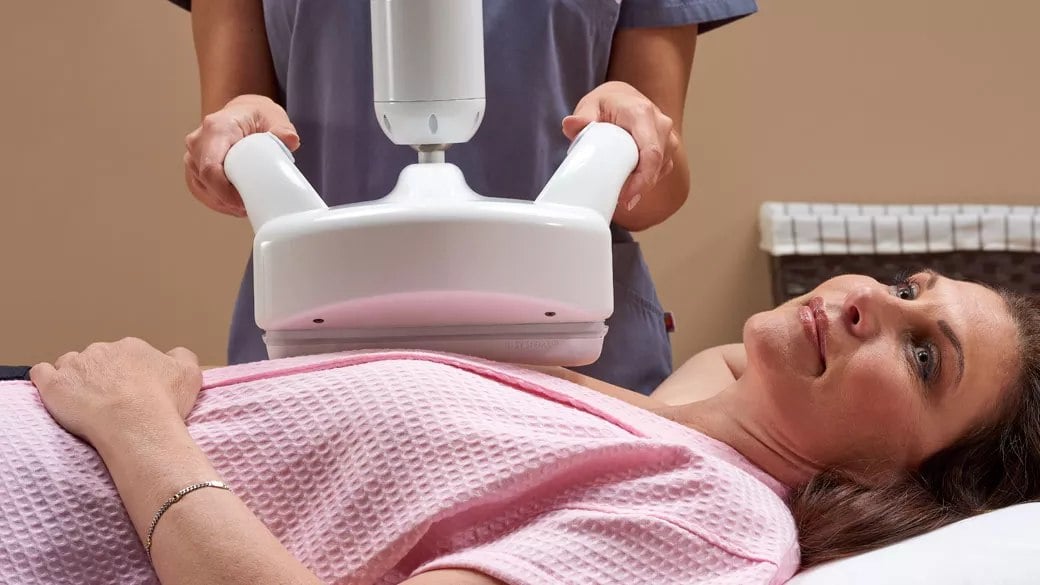
Mammography misses roughly one in three cancers in dense breast tissue. That’s the clinical problem GE HealthCare is targeting with two new products: Invenia ABUS Prime, an updated automated breast ultrasound system, and ABUS StreamVue, a browser-based viewer that recently received FDA 510(k) clearance and CE Marking.
Why dense breast screening still matters
Women with dense breasts face a 4 to 6 times higher risk of breast cancer and get less out of a standard mammogram. Supplemental ultrasound screening has been shown to catch cancers mammography misses, but access and workflow complexity have kept adoption patchy. These two products are GE’s answer to both problems.
What Invenia ABUS Prime brings to the table
The system is FDA premarket approved and builds on its predecessor with several meaningful upgrades:
- AI-powered Scan Quality Assessment and Auto Nipple Detection for more consistent image acquisition
- A Fast Scan tool that cuts scan time by up to 40% compared to Invenia ABUS 2.0, plus a redesigned transducer intended to improve patient comfort
- AI-assisted reading via QVCAD, which has shown a 33% reduction in reading time and up to 93% sensitivity for lesion detection in published studies
One of the first U.S. installations is at BeSound, a breast imaging clinic in Los Angeles that also plans a mobile screening unit. That last detail is worth watching. Mobile deployment could meaningfully extend access beyond traditional radiology settings.
StreamVue targets the enterprise reading problem
ABUS StreamVue is a zero-footprint, browser-based viewer built for multi-site networks. Developed in collaboration with Candelis, it allows radiologists to review ABUS exams remotely without local software installation. For high-volume breast centers managing imaging across multiple locations, that’s a practical operational improvement, not just a convenience.
The bigger picture
Dense breast notification laws now exist across most U.S. states, creating real demand for supplemental screening infrastructure. GE is positioning ABUS Prime and StreamVue as a paired solution for health systems that need both the acquisition hardware and the reading workflow to scale. Whether uptake follows depends on reimbursement clarity and integration into existing radiology IT environments, neither of which this launch resolves. But the clinical rationale is solid.